
On-Page SEO Services: How to Boost Rankings and Traffic
Your website may offer excellent products or services, but can potential customers find your pages through Google? If your content doesn’t match search intent, your titles lack clarity, or your website structure confuses visitors, you could miss valuable organic traffic.
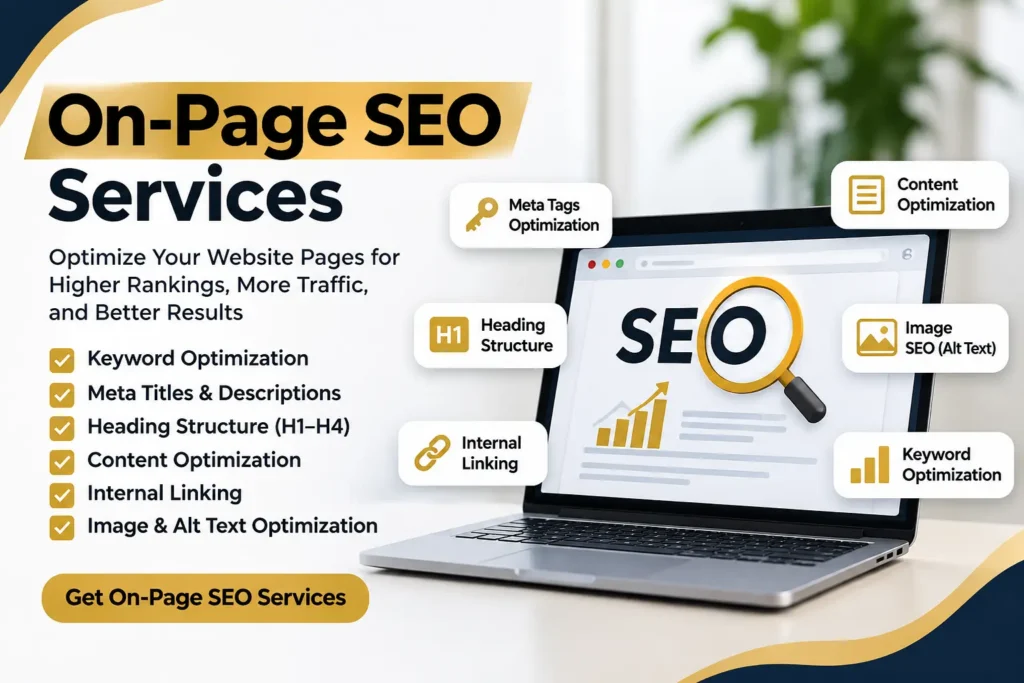
On-page SEO services help businesses improve individual website pages so search engines can understand their content and visitors can find useful information. These services cover keyword research, content optimization, title tags, meta descriptions, internal linking, image SEO, and other important page elements.
Whether you manage a business website, an online store, or a content-driven platform, professional optimization can help strengthen your organic search presence. This guide explains what’s included, how the process works, what services cost, and how to choose the right SEO provider.
What Are On-Page SEO Services?
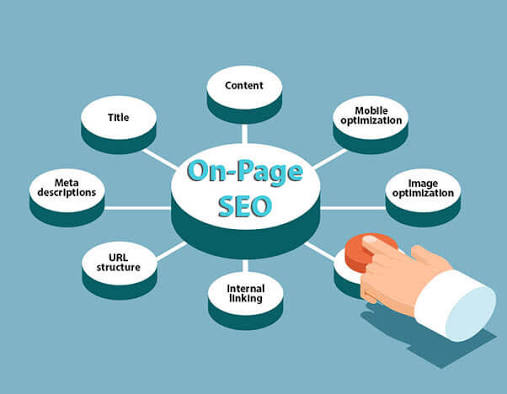
On-page SEO services involve optimizing individual website pages to improve their relevance, accessibility, and usefulness for search engines and visitors. The process focuses on elements you can control directly on your website.
Unlike link-building campaigns, which focus on external websites, on-page optimization improves your own pages and their content.
Professional services typically include:
- Keyword research and search intent analysis.
- SEO title and meta description improvements.
- Heading structure and content optimization.
- Internal linking and URL improvements.
- Image optimization and descriptive alt text.
- Relevant structured data implementation.
- Content quality reviews and optimization audits.
Why Is On-Page SEO Important?
Google needs to understand what each page covers before it can match that page with relevant searches. Clear headings, descriptive titles, useful content, and crawlable links help search engines interpret your website.
Effective optimization also helps visitors find information without unnecessary effort.
The main benefits of professional on-page SEO services include:
- Better alignment between website content and search queries.
- Improved content organization and navigation.
- Stronger internal connections between related pages.
- More relevant search result titles and descriptions.
- Better opportunities to attract qualified organic visitors.
- Improved usability across desktop and mobile devices.
On-Page SEO vs. Off-Page SEO vs. Technical SEO
These three SEO areas support different parts of organic search performance.
| SEO type | Main focus | Common activities |
| On-page SEO | Individual website pages | Content, titles, headings, internal links |
| Off-page SEO | External website signals | Link building, digital PR, brand mentions |
| Technical SEO | Website infrastructure | Crawling, indexing, site architecture, rendering |
On-page SEO vs off-page SEO isn’t a competition. Both support a broader SEO strategy. Technical SEO provides the foundation that helps search engines access and process your website.
What Is Included in Professional On-Page SEO Services?
A professional SEO provider examines each important page and identifies improvements based on its purpose, target audience, and search opportunities.
Keyword Research and Search Intent Optimization
Keyword research identifies the terms potential customers use when looking for products, services, and information.
However, selecting keywords isn’t enough. You must understand why someone searches for them.
For example:
- “What is website SEO?” indicates informational intent.
- “Best SEO services for small businesses” indicates commercial investigation.
- “Hire an SEO agency” indicates transactional intent.
Search intent optimization ensures each page answers the right question and provides information that matches the searcher’s expectations.
An effective keyword strategy also maps primary and secondary terms to appropriate pages. This prevents multiple pages from competing for the same search topic, a problem known as keyword cannibalization.
Title Tag and Meta Description Optimization
Your search listing often creates the first impression of your business.
Title tag optimization involves writing unique, descriptive titles that accurately represent individual pages. Include the primary keyword naturally and communicate the page’s main benefit.
For example:
- Weak title: SEO Services
- Improved title: Professional On-Page SEO Services for Businesses
Meta description optimization creates a concise summary that encourages relevant visitors to click.
For example:
“Improve your website visibility with professional on-page SEO services. Optimize content, metadata, headings, and internal links to attract relevant traffic.”
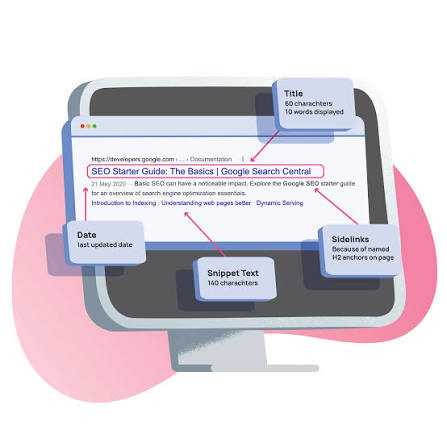
Understanding how to optimize title tags and meta descriptions also means knowing Google’s limitations. Google may generate different title links or search snippets based on page content and the search query. Meta descriptions aren’t guaranteed to appear in search results.
Google’s SEO Starter Guide explains how titles and search snippets work.
Heading Structure and Content Optimization
Headings organize information and help readers understand a page’s structure.
Each important page should have a clear main heading followed by logically organized supporting sections.
For example, a service page about website development might use:
- H1: Custom Website Development Services
- H2: Our Website Development Services
- H2: Our Development Process
- H2: Why Choose Our Development Team?
- H2: Frequently Asked Questions
Professional content optimization goes beyond inserting keywords. It improves clarity, completeness, accuracy, and topical relevance.
An SEO specialist may:
- Rewrite unclear or outdated paragraphs.
- Add missing information that readers need.
- Remove repetitive explanations.
- Include relevant examples and supporting details.
- Improve content relevance to the target search query.
Quality matters more than unnecessary word count. Google’s people-first content guidance emphasizes helpful, reliable, original information.
URL Structure Optimization
Descriptive URLs help visitors and search engines understand page topics.
For example:
- Poor: example.com/page?id=582
- Better: example.com/on-page-seo-services/
URL structure optimization includes creating readable slugs, avoiding unnecessary parameters, and maintaining consistent website architecture.
Don’t change existing URLs without a reason. If a URL must change, implement an appropriate permanent redirect and update internal links.
Internal Linking Strategy
Internal links connect related pages across your website.
A thoughtful internal linking strategy helps visitors discover relevant information and gives search engines additional paths to important pages.
For example, a blog post about LinkedIn marketing could link naturally to your LinkedIn management service page.
Effective internal linking involves:
- Using descriptive anchor text.
- Linking related pages contextually.
- Connecting supporting articles with main service pages.
- Identifying orphan pages.
- Avoiding excessive or irrelevant links.
The goal is to help visitors move naturally through your website.
Image Alt Text Optimization
Images support explanations, product information, and visual storytelling. However, search engines need additional context to understand many images.
Image alt text optimization involves writing meaningful alternative descriptions for informative images.
For example:
- Weak alt text: image123.jpg
- Better alt text: SEO specialist reviewing website keyword performance
Also consider image compression, descriptive filenames, responsive images, and modern formats such as WebP or AVIF.
Remember that decorative images generally don’t need descriptive alt text. Avoid stuffing keywords into every image description.
Schema Markup and Structured Data
Structured data provides additional information about page content through standardized formats such as Schema.org vocabulary.
Relevant implementations may include:
- Organization schema.
- LocalBusiness schema.
- Product schema.
- Article schema.
- BreadcrumbList schema.
A suitable canonical tag can also help identify the preferred URL when similar or duplicate versions of a page exist.
However, canonical tags are signals rather than absolute commands. Google may select another canonical URL when its systems find stronger evidence.
Schema markup doesn’t guarantee rich results or higher rankings. Always use accurate information and validate implementations with Google’s Rich Results Test.
On-Page SEO Services for Different Types of Websites
Different businesses need different optimization strategies. A product page doesn’t have the same purpose as a blog post or service landing page.
Business and Service Websites
Service websites need clear descriptions of their offerings and strong conversion paths.
Optimization may include:
- Creating focused service pages.
- Explaining deliverables and benefits.
- Adding relevant customer questions.
- Improving calls to action.
- Connecting related services through internal links.
For example, a digital marketing agency could create separate pages for SEO, social media marketing, and website development.
E-Commerce Websites
Online stores require optimization across product and category pages.
Important activities include:
- Writing unique product descriptions.
- Improving category page content.
- Optimizing product titles and images.
- Adding accurate product structured data.
- Managing duplicate URLs caused by filters and sorting.
Avoid copying manufacturer descriptions across hundreds of products. Original details help customers understand what makes each product useful.
Blogs and Content-Based Websites
Blogs benefit from a clear topic structure and consistent content maintenance.
SEO specialists can improve existing articles, connect related topics, update outdated information, and identify missing supporting content.
A well-organized topic cluster might connect a main article about on-page SEO with supporting articles about keyword research, title tags, internal linking, and content audits.
Local Business Websites
Local businesses need pages that clearly communicate their services and service areas.
Optimization may involve location-specific landing pages, accurate business information, local service descriptions, and relevant location-based keywords.
However, avoid creating dozens of nearly identical location pages. Each page should offer useful information specific to its location.
How Does the Professional On-Page SEO Process Work?
A reliable provider follows a structured process instead of making random changes across your website.
| Step | Activity | Expected outcome |
| 1 | Website SEO audit | Identify optimization issues |
| 2 | Keyword research | Find relevant search opportunities |
| 3 | Content analysis | Discover missing or weak information |
| 4 | Metadata optimization | Improve titles and descriptions |
| 5 | Content improvements | Strengthen relevance and usefulness |
| 6 | Internal linking | Connect related website pages |
| 7 | Technical validation | Check relevant implementation issues |
| 8 | Performance monitoring | Measure results and identify further opportunities |
What Happens During an On-Page SEO Audit?
On-page SEO audit services examine individual pages to identify problems that may affect their search performance.
An audit may review:
- Missing or duplicate title tags.
- Weak meta descriptions.
- Incorrect heading structures.
- Thin or repetitive content.
- Broken internal links.
- Missing image alt attributes.
- Duplicate or conflicting canonical tags.
- Indexing and crawlability concerns.
- Mobile usability and page performance.
The final report should prioritize issues by impact and implementation effort. Fixing an important service page often matters more than correcting minor issues across dozens of low-value pages.
Essential On-Page SEO Tools and Technologies
Professional SEO specialists use different tools to research, audit, and monitor websites.
| Tool | Primary purpose |
| Google Search Console | Monitor impressions, clicks, indexing, and search queries |
| Google Analytics 4 | Analyze website traffic and conversions |
| Semrush | Research keywords and competitors |
| Screaming Frog | Crawl websites and identify page-level issues |
| Google PageSpeed Insights | Analyze loading performance and user experience |
| Yoast SEO | Manage SEO elements on WordPress |
| Rank Math | Support WordPress SEO implementation |
Why Core Web Vitals Matter
Core Web Vitals measure real-world user experience through three main metrics:
- Largest Contentful Paint (LCP): Measures loading performance. A good result is 2.5 seconds or less.
- Interaction to Next Paint (INP): Measures responsiveness. A good result is under 200 milliseconds.
- Cumulative Layout Shift (CLS): Measures visual stability. A good result is 0.1 or less.
These thresholds come from Google’s official Core Web Vitals documentation.
Although these metrics matter, perfect scores don’t guarantee top rankings. Focus on meaningful improvements that make pages easier to use.
DIY On-Page SEO vs. Hiring Professional SEO Services
You can handle basic optimization yourself. However, larger websites often need specialist knowledge and consistent implementation.
| Factor | DIY SEO | Professional SEO |
| Keyword research | Self-managed | Specialist-led |
| Content optimization | Manual | Structured process |
| Website audits | Limited by experience | More comprehensive |
| SEO tools | Self-selected | Professional toolsets |
| Implementation | Internal team | Agency or specialist |
| Monitoring | Self-managed | Regular reporting |
DIY optimization makes sense when you have a small website and enough time to learn SEO.
Professional support becomes more valuable when you manage many pages, face strong competition, or need help identifying complex optimization issues.
How Much Do On-Page SEO Services Cost?
The cost depends on your website, business requirements, and the amount of work involved. There isn’t one standard price for every business.
Common pricing models include:
- One-time optimization: Suitable for businesses that need improvements across existing pages.
- Monthly retainers: Useful for ongoing content optimization and performance monitoring.
- Hourly consulting: Appropriate for specific recommendations or specialist guidance.
- Project-based pricing: Useful for website launches, redesigns, and larger optimization projects.
Factors affecting costs include website size, content quality, industry competition, technical complexity, and implementation requirements.
If you’re comparing affordable on-page SEO services, don’t choose a provider based on price alone. Ask for a clear scope of work and specific deliverables.
A professional package should explain which pages the provider will optimize, what changes they’ll make, and how they’ll measure progress.
How to Choose an On-Page SEO Company
Choosing the right provider requires more than reviewing a sales proposal.
Before hiring an on-page SEO services company, evaluate these factors:
- Relevant experience: Does the provider understand your industry and website type?
- Audit process: Can they identify specific page-level problems?
- Content expertise: Do they understand search intent and content quality?
- Transparent deliverables: Will they explain exactly what they’ll optimize?
- Reporting: Can they show measurable progress through reliable data?
- Communication: Will they explain recommendations clearly?
Questions to Ask Before Hiring an SEO Agency
- What does your on-page optimization process include?
- Will you optimize existing content or create new content?
- How do you identify keyword and content gaps?
- Which SEO tools do you use?
- How will you measure improvements?
- Do you provide implementation or recommendations only?
Be cautious of agencies promising guaranteed first-page rankings. Search performance depends on many factors outside any provider’s direct control.
Common On-Page SEO Mistakes to Avoid
Even websites with useful content can struggle when important optimization details receive little attention.
Watch out for these mistakes:
- Targeting keywords without understanding search intent.
- Repeating keywords unnaturally throughout content.
- Publishing duplicate or thin service pages.
- Writing identical title tags across multiple URLs.
- Using vague internal link anchor text.
- Ignoring broken links and orphan pages.
- Adding irrelevant schema markup.
- Changing URLs without proper redirects.
- Treating SEO scores as guaranteed ranking indicators.
One particularly overlooked problem is keyword cannibalization. When multiple pages target the same search intent, they may compete for similar queries. Review their purposes and consider consolidating overlapping content when appropriate.
How to Measure the Success of On-Page SEO Services
Optimization should produce measurable improvements, not just a completed checklist.
Use Google Search Console to monitor:
- Impressions: How often your pages appear in search results.
- Clicks: How many visitors reach your website through Google.
- CTR: The percentage of impressions that generate clicks.
- Average position: Your pages’ average position across reported queries.
Use Google Analytics 4 to examine organic landing page performance, engagement, and conversions.
An Illustrative Optimization Example
Imagine a service business with a page targeting website development services.
An audit identifies several issues:
- The page uses a vague title.
- Its content doesn’t explain individual services.
- Headings lack a logical structure.
- Related service pages don’t link to it.
- The page has no clear consultation CTA.
An optimization project could improve the title, expand service descriptions, reorganize headings, add relevant internal links, and clarify the next step.
After implementation, the business can compare Search Console impressions, clicks, and relevant queries against its previous performance.
This is an illustrative workflow, not a claim about actual client results. Real outcomes depend on competition, website history, content quality, and implementation.
On-Page SEO Best Practices for Long-Term Growth
Strong optimization requires regular attention rather than one-time keyword placement.
Follow these practices:
- Create content that answers genuine customer questions.
- Give each important page a distinct purpose.
- Update outdated information when facts change.
- Use relevant internal links to connect topic clusters.
- Write descriptive titles and useful meta descriptions.
- Review competing pages for content gaps.
- Check mobile usability and page performance.
- Monitor search queries to identify new opportunities.
- Keep structured data accurate and relevant.
Google’s guidance consistently emphasizes helpful, reliable, people-first content. Build pages for visitors rather than producing content solely to manipulate rankings.
Conclusion
Your website needs more than keywords to perform well in organic search. Every important page should provide relevant information, clear structure, useful internal links, and a smooth visitor experience.
Professional on-page SEO services help businesses identify optimization gaps and improve their friendly websites through a structured process. From title tags and content improvements to internal linking and image optimization, each activity should support a clear purpose.
If your website isn’t attracting the right organic visitors, start with a detailed SEO audit. Identify your highest-priority pages, address their weaknesses, and measure the results.
Frequently Asked Questions
What Are On-Page SEO Services?
On-page SEO services improve individual website pages through keyword research, content optimization, title tags, meta descriptions, headings, internal linking, image SEO, and other page-level improvements.
How Long Does On-Page SEO Take to Show Results?
There isn’t a fixed timeline. Google needs to crawl and process updated pages, and ranking changes depend on competition, content quality, website history, and other factors. Monitor performance over several weeks and months rather than expecting immediate results.
Can On-Page SEO Improve Google Rankings?
Yes. Effective optimization helps search engines rank understand page content and its relevance to queries. However, no individual technique guarantees higher rankings.
How Often Should You Optimize Website Content?
Review important pages regularly and update them whenever information becomes outdated, search intent changes, or performance reveals improvement opportunities. Not every page needs frequent revisions.
Can I Do On-Page SEO Without Hiring an Agency?
Yes. You can manage basic keyword research, metadata, headings, internal links, and content improvements yourself. Larger or more complex websites may benefit from professional support.
Are Professional On-Page SEO Services Worth the Investment?
They can be worthwhile when they address genuine website problems and support business goals. Evaluate the provider’s expertise, deliverables, reporting, and ability to measure meaningful outcomes.