LinkedIn’s Biggest Shift in a Decade: What the 360Brew AI Engine Really Means for Your Business

LinkedIn didn’t just update its platform   it introduced an entirely new intelligence layer called 360 Brew, an AI engine designed to understand people, not posts. While most creators are still optimising for impressions, hashtags, and posting frequency, the ground beneath them has already moved.

For the first time, LinkedIn has confirmed that its ranking content based on professional value, clarity, and expert identity, not vanity metrics.
This change is massive: according to LinkedIn’s own data, over 65% of users come to the platform for knowledge, not entertainment. 360 Brew is built to serve exactly that behaviour   and phase out everything that dilutes it.
LinkedIn Algorithm 2026: The Death of Generic Value Posts

The professional networking landscape is experiencing a paradigm shift. As we move through 2025 and into 2026, LinkedIn’s algorithm has evolved from a simple content distributor into a sophisticated intelligence system that distinguishes between superficial engagement bait and genuine professional value. The message is clear: generic “value posts” are dying, and only authentic expertise will survive.

5 Frameworks for Writing Posts That Stand Out in 2025

Creating content that holds attention is harder than ever. With platforms reporting a 30–40% decline in engagement on generic posts, the need for structured, high-authority writing frameworks has grown. Strong frameworks don’t just make writing easier they help your content stay memorable, actionable, and aligned with how modern algorithms evaluate value. Below are five proven frameworks that work consistently in 2025.

LinkedIn Personal Branding

The Content Shift: What’s Working on LinkedIn in 2025 and What’s Dead

LinkedIn in 2025 doesn’t behave like the LinkedIn of even a year ago. The platform’s algorithm has shifted toward depth, relevance, and user trust moving away from vanity metrics and generic posting frequency. With over 1.1 billion users on the platform and a 22% increase in time spent per session, the competition for meaningful visibility has never been higher. What worked before now collapses under algorithm changes designed to prioritise quality over quantity.

How to Rank on AI Search Engines: The New Frontier of SEO

AI search engines are reshaping how people discover information online, and brands that adapt early gain an advantage. With more than half of U.S. Google searches 58.5% now ending without a click because users get their answers directly on the results page, the old SEO strategy is no longer enough. At the same time, traffic coming from AI-powered search tools has grown by over 500% year-over-year, showing where user attention is shifting. To stay visible, your content needs to be optimized not just for search engines but for AI-driven answers.

LinkedIn Profile Personal Branding

How to Turn Content into a Narrative Engine: From Episodic Posts to Story Arcs That Build Demand

Most brands publish content, but very few build a narrative. That difference determines whether your audience remembers you or scrolls past you. When content feels scattered, it’s usually because it’s delivered as disconnected episodes rather than part of a bigger story. A narrative engine turns your message into something people can follow, anticipate, and trust.

A narrative engine is a long-term storyline your content reinforces again and again. Instead of sharing random tips, you create a sense of progression: what you stand for, what you challenge, and what transformation you lead. Readers begin to feel like they’re on a journey with you, not just consuming information.

LinkedIn Personal Banding

The Positioning Gap: Why Your Content Feels Invisible (and How to Fix It)

If you’ve ever felt like you’re putting time and energy into content that no one seems to notice, you’re not alone. You post consistently, share insights, and yet nothing seems to land. It’s not that your ideas are weak or your offer isn’t valuable. The real issue lies in what’s known as The Positioning Gap.

The Positioning Gap is the invisible distance between what you say and what your audience hears. It’s the reason people scroll past your posts, even when your content is good. It’s why your competitors seem to get traction saying similar things, and why you often feel like shouting louder just to be seen.

But visibility doesn’t come from volume. It comes from alignment.

Your message, audience, and offer must fit together like gears in motion. When one is out of sync, your content loses connection and authority. Fortunately, there’s a simple way to bridge that gap through the 3-Step Alignment Model:

ChatGPT 2030: The Future of Search, Intelligence, and Influence

By the year 2030, ChatGPT will no longer be “just a chatbot.”
It will be the core layer of digital intelligence through which we search, learn, shop, communicate, and even make decisions.
What began as a conversation interface will evolve into a personalized operating system for human thought.

Let’s look ahead at what this transformation could look like and what it means for businesses, creators, and everyday users.

Why Your LinkedIn Isn’t Converting (And It’s Not the Algorithm)

Many professionals assume their low LinkedIn results are caused by the algorithm. In reality, most conversion issues have little to do with reach or impressions. They come from how clearly your message connects to your audience.

In 2025, LinkedIn reports over 1 billion active users and more than 65 million decision-makers using the platform each week (LinkedIn, 2025). The opportunity for visibility has never been higher, yet thousands of creators and consultants still struggle to turn content into conversations or clients. The problem is not the algorithm. It is a lack of narrative consistency, tone, and message-market fit.

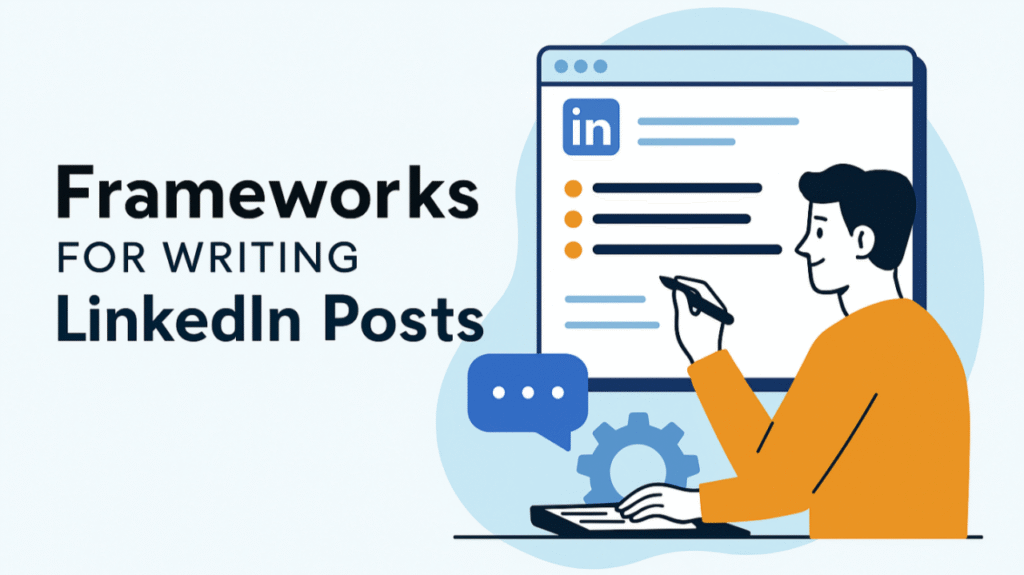
Frameworks for Writing LinkedIn Posts

LinkedIn is no longer just a digital résumé it’s a powerful platform for building credibility, sharing insights, and attracting opportunities. But many professionals struggle with what to write and how to structure their posts so they actually get read. That’s where frameworks come in.

Frameworks give you a repeatable structure to organize your thoughts, making your posts clearer, more engaging, and easier for your audience to act on. Below are some proven frameworks you can use to write compelling LinkedIn content.