
The Secret to Writing LinkedIn Posts (Without Sounding Like AI)
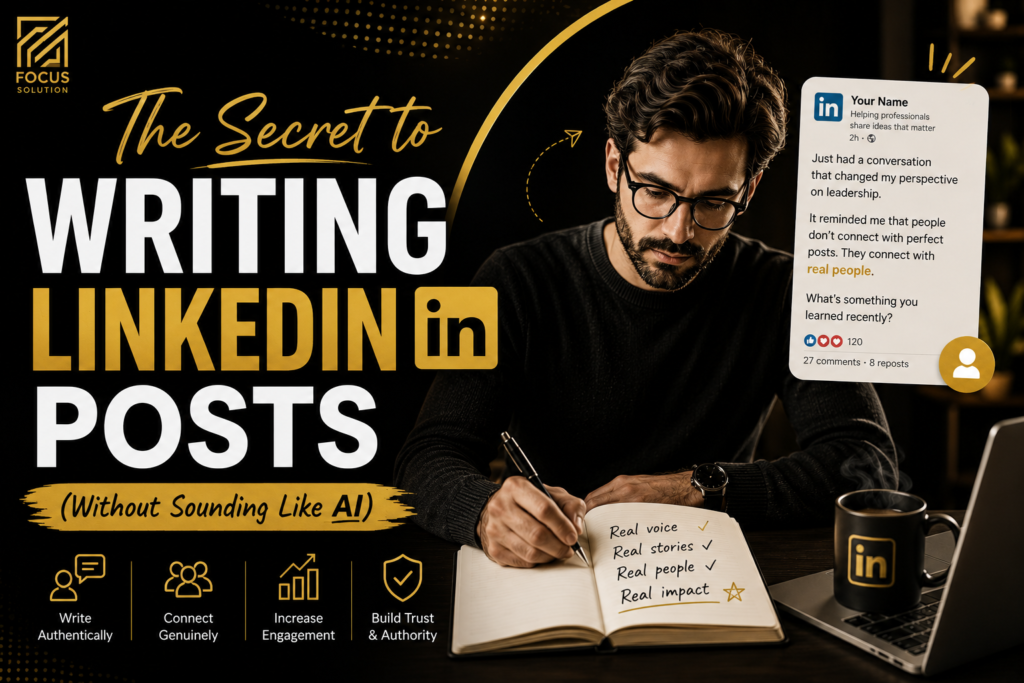
LinkedIn is full of content. But very little of it feels real.
You’ve probably seen posts that sound polished yet strangely empty. They use perfect formatting, trendy hooks, and “motivational” storytelling but something still feels off. Readers scroll past because the content sounds manufactured instead of human.
The problem is not AI itself. The problem is when people stop sounding like people.
Today, audiences are more aware than ever. They can instantly tell when a post feels forced, overly optimized, or written only for impressions. What people actually engage with are thoughts, experiences, opinions, and stories that feel genuine.
That’s why learning how to write human LinkedIn posts matters more than ever.
In this blog, you’ll learn why most LinkedIn content feels robotic, what makes writing feel authentic, and practical ways to create posts that connect with real people while still performing well on the platform.
Why Most LinkedIn Posts Feel Robotic
The biggest reason LinkedIn posts feel artificial is that people write for the algorithm instead of the audience.
They focus solution so much on “viral frameworks” that they lose their natural voice. Every post starts sounding the same:
“I learned this one lesson…”
“Here’s the harsh truth…”
“Nobody talks about this enough…”
While frameworks can help structure ideas, overusing them removes personality. Readers don’t connect with formulas. They connect with honesty, perspective, and emotion.
Another reason is over-editing. Many professionals try to sound overly smart or formal on LinkedIn because they believe professionalism means sounding corporate. In reality, overly polished language often creates distance instead of trust.
Human writing sounds conversational. It feels like one person talking to another person — not a company issuing a press release.
The irony is that the more human your content sounds, the more professional credibility you often build.
Write Like You Speak
One of the easiest ways to create human LinkedIn posts is to stop writing like an essay and start writing like a conversation.
Think about how you would explain an idea to a colleague over coffee. You would probably use simple words, shorter sentences, and natural phrasing. That is exactly what works online.
Many people confuse complexity with intelligence. But clear communication is far more powerful than complicated wording.
For example:
Instead of saying:
“Leveraging strategic synergies enabled scalable operational outcomes.”
You could say:
“We simplified the process, and the team started working faster.”
The second version sounds human because it is direct and relatable.
Good LinkedIn ghostwriting does not try to impress readers with vocabulary. It focuses on clarity and connection.
When editing your content, ask yourself:
“Would I actually say this in real life?”
If the answer is no, rewrite it.
Focus on Specific Experiences, Not Generic Advice
One major difference between robotic content and authentic content is specificity.
Generic advice sounds forgettable because anyone could have written it. Human content includes real situations, emotions, lessons, and observations.
For example, compare these two statements:
“Consistency is important for success.”
Versus:
“I posted on LinkedIn for four months with almost no engagement before one post suddenly brought three inbound leads.”
The second version feels believable because it includes experience. Readers can picture the situation. It feels lived-in instead of copied from a motivational quote page.
You do not need dramatic stories to create engaging content. Even small moments can make posts feel authentic:
- A difficult client conversation
- A lesson from a failed campaign
- A realization during a meeting
- A mistake you learned from
- An unpopular opinion based on experience
People remember stories because stories feel human.
Stop Trying to Sound Perfect
Perfection kills personality.
Some of the best-performing LinkedIn posts are not perfectly written. They work because they feel honest. Readers relate to vulnerability, reflection, and imperfection far more than polished corporate messaging.
That does not mean writing carelessly. It means allowing your natural voice to exist.
Sometimes creators remove all personality during editing because they are afraid of sounding “unprofessional.” But modern audiences trust people who sound real.
If every sentence sounds carefully engineered for engagement, readers notice it immediately.
Human LinkedIn posts often include:
- Personal observations
- Simple language
- Honest opinions
- Emotion and reflection
- Natural transitions
- Realistic storytelling
You do not need to pretend to have all the answers. In fact, sharing lessons you are still learning can make your content more relatable.
Confidence builds authority. Authenticity builds trust.
The strongest personal brands combine both.
Write for One Person, Not Thousands
One secret many great writers use is imagining a single reader while writing.
When you try to speak to everyone, your writing becomes broad and impersonal. But when you write as if you are talking directly to one person, the tone naturally becomes warmer and more engaging.
Before writing your next post, ask yourself:
- Who is this for?
- What are they struggling with?
- What would actually help them?
This shift changes your writing completely.
Instead of trying to sound impressive, you start trying to sound useful.
That is when content becomes valuable.
The best LinkedIn creators are not necessarily the smartest writers. They are the ones who deeply understand their audience and communicate clearly.
The Balance Between AI and Authenticity
AI tools can absolutely help with content creation. They can speed up brainstorming, improve structure, and generate ideas quickly.
But AI should support your thinking — not replace your voice.
The mistake many creators make is copying AI-generated text directly without adding personal perspective. That is why so much content feels identical.
If you use AI, treat the output as a draft. Add your own experiences, rewrite phrases in your natural tone, and include opinions only you can share.
Your unique perspective is what makes content valuable.
Technology can help you write faster. But authenticity is still what makes people care.
The future of LinkedIn content will not belong to the people who automate everything. It will belong to the people who combine smart tools with genuine human communication.
Conclusion
Writing human LinkedIn posts is not about sounding casual or imperfect on purpose. It is about creating content that feels honest, clear, and relatable.
People engage with posts that sound real because trust is built through authenticity, not performance.
If you want your LinkedIn content to stand out, stop chasing formulas alone. Focus on clarity, personal experience, and genuine communication. Write like a human speaking to another human.
Because at the end of the day, the most effective content is not the most optimized content.
It is the content people actually feel connected to.
And that is the real secret behind writing better human LinkedIn posts.


