
The Hidden Psychology Behind High-Converting Brands
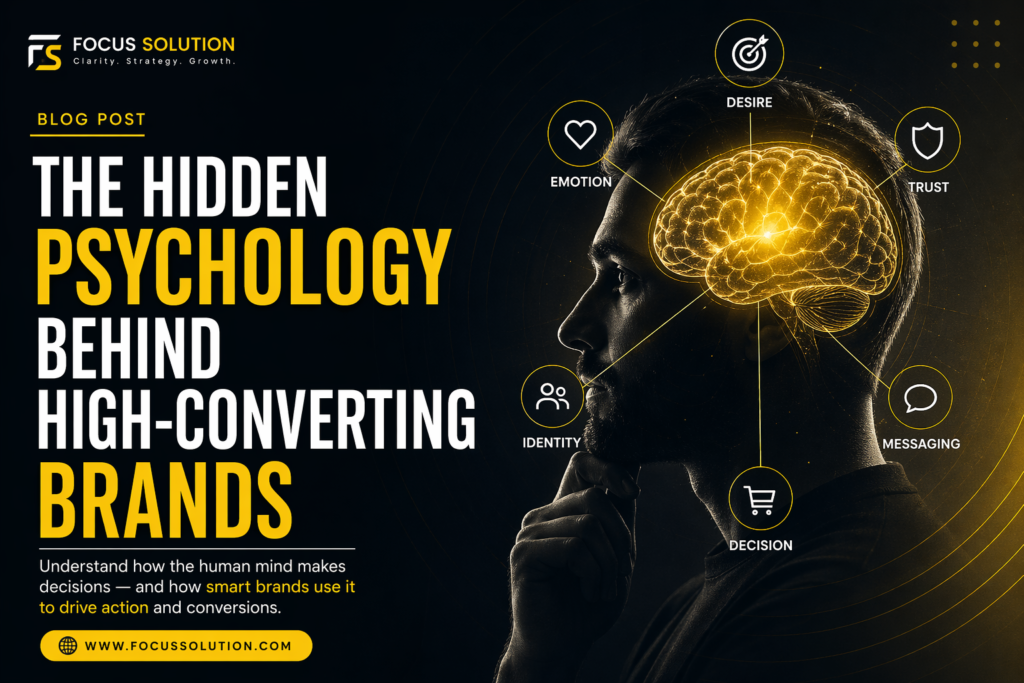
It’s not just design. It’s not about posting more. And it’s definitely not luck.
High-converting brands understand something deeper: human psychology.
They know how people think, what drives decisions, and how to remove doubt before it even appears. Instead of chasing trends, they build systems around how the brain actually works.
In this blog, you’ll learn the hidden psychology behind high-converting brands and how to apply it to your own business in a practical way.
Clarity Reduces Friction (And Friction Kills Conversions)
Most brands don’t have a traffic problem. They have a clarity problem.
When someone lands on your website or sees your content, they’re asking one question: “Do I understand this?”
If the answer is no, they leave.
Confusion creates friction. And friction kills conversions.
High-converting brands remove this friction by making everything obvious. They communicate what they do, who it’s for, and why it matters in seconds.
The Brain Wants Easy Decisions
The human brain is designed to conserve energy. It avoids effort whenever possible.
If your message is complicated, filled with jargon, or unclear, the brain sees it as work. And when something feels like work, people delay or avoid making a decision.
This is why simple brands win.
Not because they are basic, but because they are clear.
Clarity reduces thinking. And when thinking is reduced, action increases.
Emotion Drives Action (Not Logic)
People like to believe they make logical decisions. But most decisions are emotional first and rationalized later.
High-converting brands understand this and build their messaging around emotional triggers.
They don’t just explain what they do. They show what it feels like before and after working with them.
What People Actually Buy
People don’t buy services. They buy outcomes and feelings.
They don’t want branding. They want confidence.
They don’t want marketing. They want growth.
They don’t want strategy. They want certainty.
When your message connects with these deeper desires, it becomes far more powerful than listing features or deliverables.
Emotion creates urgency. Logic simply justifies the decision afterward.
Perceived Authority Builds Trust Instantly
Trust is the foundation of every conversion. Without it, nothing happens.
Online, trust is built in seconds. People quickly decide whether you are credible or not.
High-converting brands don’t leave this to chance. They position themselves as clear thinkers with strong perspectives.
Authority Is About Clarity, Not Just Experience
Many businesses believe authority comes from years of experience or long lists of achievements.
While those help, they are not enough.
Authority today comes from how clearly you communicate your ideas. It comes from having a point of view and expressing it with confidence.
People trust brands that sound certain. Uncertainty creates doubt, and doubt blocks action.
Consistency Creates Familiarity (And Familiarity Builds Trust)
The more people see something, the more they trust it. This is known as the mere exposure effect.
High-converting brands use this to their advantage by staying consistent across everything they do.
Their tone, visuals, messaging, and content all feel aligned.
Inconsistency Feels Like Risk
When your brand constantly changes its message or voice, people struggle to understand you.
And when people don’t understand you, they don’t trust you.
Consistency creates recognition. Recognition creates comfort. And comfort increases the likelihood of conversion.
Specificity Signals Confidence
Vague brands feel uncertain. Specific brands feel confident.
When your message is broad, it forces the audience to do the work of figuring out whether you are relevant to them.
Most people won’t do that work.
High-converting brands are precise. They clearly define who they help, what problem they solve, and what result they deliver.
Why Specificity Works
Specificity attracts the right audience and filters out the wrong one.
This may feel counterintuitive, but trying to appeal to everyone weakens your message.
When your message speaks directly to a specific person, it becomes more relatable, more believable, and more effective.
Clarity and specificity together create strong positioning.
Conclusion
The hidden psychology behind high-converting brands is not about tricks or hacks. It is about understanding how people think and building your brand around that.
They focus on clarity instead of complexity. Emotion instead of information. Authority instead of noise. Consistency instead of randomness. And specificity instead of generalization.
When you align your brand with human psychology, everything becomes easier. Your message connects faster, your audience understands you better, and your conversions improve naturally.
If your brand is not converting right now, the problem is not that you need more tactics.
The problem is that your brand is not aligned with how people make decisions.
Start there. Everything else will follow.