
Personal Branding: Why Everyone Already Has a Brand and How to Build It
Introduction
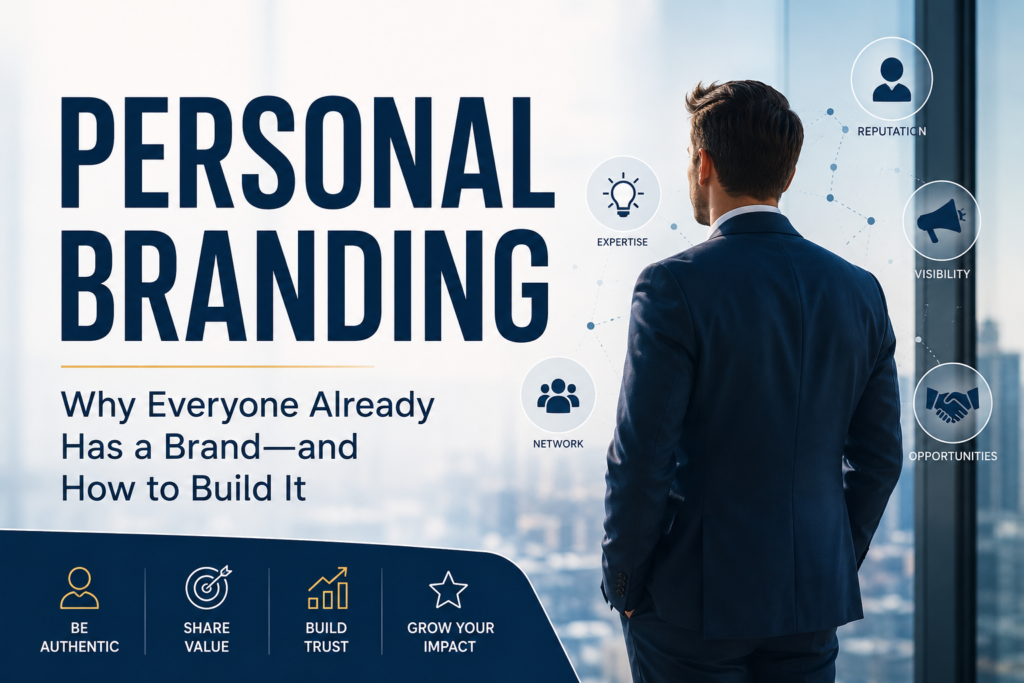
Whether you’re a student, entrepreneur, executive, freelancer, or job seeker, you already have a personal brand. It’s not something reserved for influencers or CEOs—it’s the perception others form about you through your actions, communication, expertise, and online presence. Personal branding is about intentionally shaping that perception so it aligns with who you are and the opportunities you want to attract.
1. The Reality of Personal Branding
Many people believe they don’t have a personal brand simply because they haven’t actively built one. In reality, everyone has one.
Every interaction whether in person, through email, on social media, or during a meeting creates an impression. Your professionalism, communication style, reliability, appearance, and expertise all contribute to how others perceive you.
The question isn’t whether you have a personal brand. The question is whether you’re managing it intentionally.
Key Takeaway: Your personal brand exists whether you build it or not.
2. How Personal Branding Began
The concept of personal branding became widely recognized in 1997 when management consultant Tom Peters encouraged professionals to think of themselves as brands rather than simply employees.
His message challenged traditional career thinking by suggesting that people should take ownership of their reputation, expertise, and professional identity instead of relying solely on their employer or job title.
Today, that idea has become even more relevant as careers become increasingly dynamic and competitive.
Key Takeaway: Your career belongs to you, and your reputation is one of your greatest assets.
3. The Role of Social Media
Social media has transformed personal branding from something built mainly through face-to-face interactions into a digital-first experience.
Professional platforms like LinkedIn allow people to showcase:
- Professional experience
- Skills and expertise
- Industry knowledge
- Recommendations and endorsements
- Thought leadership
- Career achievements
However, simply having a profile isn’t enough. Strategic content, meaningful engagement, and consistency help strengthen credibility and visibility.
Key Takeaway: Social media doesn’t create your personal brand it amplifies it.
4. Personal Branding Is a Continuous Process
Unlike corporate brands, personal brands are never created overnight.
Your brand develops throughout your career based on:
- Experiences
- Skills
- Values
- Communication
- Relationships
- Professional achievements
As your career evolves, your personal brand should evolve with it. New roles, certifications, accomplishments, and changing goals all contribute to refining your professional identity.
Key Takeaway: Personal branding is ongoing, not a one-time project.
5. What Professionals Say About Personal Branding
Research involving sales professionals, managers, executives, and self-employed professionals found that many intentionally manage their personal brands to support their careers.
Participants highlighted benefits such as:
- Increased professional credibility
- Stronger client relationships
- Better networking opportunities
- Career advancement
- Greater trust
- Improved business opportunities
Many also emphasized the importance of aligning their personal brand with the values of the organizations they represent.
Key Takeaway: A strong personal brand creates both individual and organizational value.
6. Managing Your Personal Brand
Building a personal brand isn’t enough you must maintain it.
Effective personal brand management involves:
- Updating your online profiles regularly
- Sharing recent achievements
- Developing new skills
- Seeking feedback
- Monitoring your online presence
- Measuring engagement and professional growth
As industries change and careers progress, your brand should reflect your current expertise rather than outdated accomplishments.
Key Takeaway: An outdated personal brand can limit opportunities.
7. Best Practices for Building a Strong Personal Brand
Successful personal branding requires authenticity and strategy.
Some practical recommendations include:
- Define your professional values
- Identify your unique strengths
- Understand your target audience
- Share valuable insights consistently
- Maintain consistency across platforms
- Align your brand with organizational goals
- Continue learning and developing expertise
- Build genuine professional relationships
Authenticity remains one of the strongest drivers of trust and credibility.
Key Takeaway: Consistency and authenticity are the foundation of a successful personal brand.
8. Personal Branding Is a Long-Term Investment
Personal branding isn’t about becoming famous or gaining followers.
It’s about building a reputation that consistently communicates your expertise, professionalism, and values over time.
As careers evolve, your personal brand should continue evolving through learning, experience, and meaningful professional contributions. Regular reflection helps ensure that the image others have of you matches the professional you aspire to become.
Key Takeaway: Your personal brand is one of your most valuable long-term career assets.
Conclusion
Everyone has a personal brand, whether they intentionally build it or not. By understanding how perceptions are formed, leveraging digital platforms effectively, continuously refining your professional identity, and aligning your actions with your values, you can build a personal brand that creates credibility, trust, and lasting career opportunities. The most successful professionals don’t leave their reputation to chance—they manage it with purpose and consistency.