
Personal Branding Mistakes That Quietly Kill Opportunities
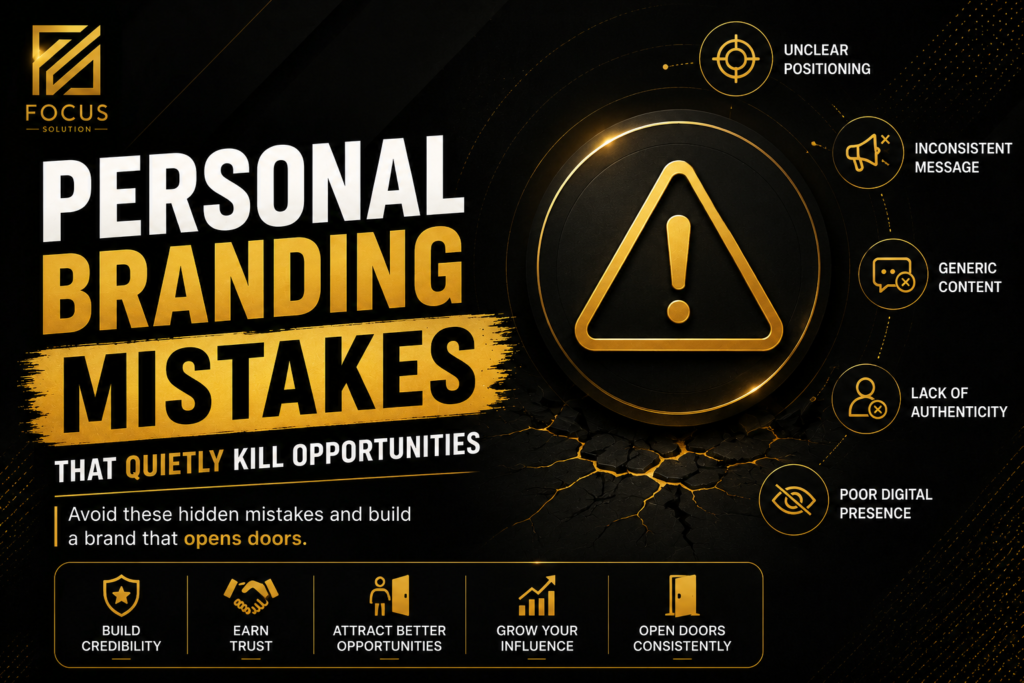
A weak personal brand rarely fails loudly. Most of the time, it fails silently.
You do not get the callback. The client chooses someone else. Your content gets ignored. Opportunities pass by without explanation. And while many people assume the problem is experience, pricing, or market competition, the real issue is often perception.
In today’s digital world, people form opinions within seconds. According to research from Forbes, first impressions online are heavily influenced by visual consistency, communication style, and perceived credibility before expertise is even evaluated. Another study from LinkedIn found that decision-makers are significantly more likely to engage with professionals who maintain a clear and active professional presence online.
That means your personal brand is working even when you are not.
The problem is that many professionals unknowingly damage their credibility through small branding mistakes that quietly reduce trust over time. These mistakes may seem harmless individually, but together they create confusion, inconsistency, and doubt.
The good news is that most of them are fixable once you become aware of them.
Looking Professional Instead Of Looking Trustworthy
One of the biggest personal branding mistakes is focusing too much on appearance and not enough on trust.
Many people spend hours choosing logos, colors, templates, and polished graphics, yet their audience still feels disconnected from them. Why? Because people do not trust perfection anymore. They trust clarity, consistency, and authenticity.
A professional-looking profile means very little if your message feels generic. Audiences want to understand who you are, what you stand for, and why your perspective matters. If your content sounds like everyone else in your industry, you become forgettable regardless of how polished your design is.
Strong personal brands communicate personality. They sound human. They reveal perspective. They make people feel like there is a real person behind the screen.
This is especially important on platforms like LinkedIn, where audiences increasingly engage with thought leadership content that feels personal rather than corporate.
Inconsistency Across Platforms
Another mistake that quietly kills opportunities is inconsistency.
Someone discovers your Instagram profile and sees one version of you. Then they visit your LinkedIn and see a completely different tone, message, or level of professionalism. Your website says one thing while your content communicates another.
This creates confusion.
According to branding research published by Lucidpress, consistent brand presentation can increase revenue by up to 33%. While this statistic is often applied to businesses, the same principle applies to personal brands. Consistency builds familiarity, and familiarity builds trust.
That does not mean every platform should look identical. Different platforms require different styles of communication. However, your core identity should remain recognizable everywhere.
Your audience should immediately understand:
- What you do
- Who you help
- What makes your perspective unique
- What your values are
When your online presence lacks alignment, people hesitate. And hesitation often leads to lost opportunities.
Posting Content Without Positioning
Many professionals create content regularly but still struggle to build authority. The reason is simple: visibility without positioning does not create influence.
You can post every day and still remain invisible if your audience cannot clearly identify your expertise.
A common mistake is trying to speak to everyone. Broad messaging feels safer, but it weakens positioning. Strong personal brands are specific. They own a clear space in people’s minds.
For example, there is a major difference between:
- “I help businesses grow”
and - “I help founders build authority-driven personal brands online.”
Specificity creates memorability.
According to Edelman Trust Barometer research, trust is increasingly driven by expertise and authenticity rather than institutional reputation alone. People want to follow individuals who demonstrate a clear understanding of a focused subject area.
If your audience cannot explain what you are known for in one sentence, your positioning likely needs work.
Ignoring The Emotional Side Of Branding
Personal branding is not just about information. It is about emotional perception.
People remember how your content makes them feel. They remember whether your message felt clear, relatable, inspiring, insightful, or trustworthy.
Yet many professionals communicate in a way that feels emotionally flat. Their content is technically correct but lacks humanity. It sounds polished but disconnected.
This matters because human decisions are deeply emotional. Research from Harvard Business School shows that emotions heavily influence decision-making, even in professional environments where people believe they are acting purely logically.
The strongest personal brands understand this. They combine expertise with emotional connection.
They share stories. They communicate lessons. They reveal perspective. They allow audiences to see the person behind the expertise.
This does not mean oversharing personal details online. It means communicating with enough honesty and personality that people feel connected to your message.
Neglecting Your Digital First Impression
Most opportunities today begin with a search.
Before booking a call, hiring a consultant, inviting a speaker, or responding to a proposal, people look you up online. Your digital presence becomes your first meeting before the real meeting happens.
Unfortunately, many professionals neglect this completely.
Outdated profile photos, incomplete bios, inactive accounts, weak headlines, low-quality websites, and scattered messaging quietly damage credibility. Even if your expertise is strong, a poor digital first impression creates doubt.
According to research from Stanford University, website credibility is strongly influenced by visual design and perceived professionalism. People make rapid judgments based on appearance before they evaluate actual substance.
This means your online presence should not only communicate expertise but also clarity and trustworthiness.
Simple improvements can make a major difference:
- A clear professional bio
- Consistent profile imagery
- High-quality content
- A focused message
- Strong visual identity
- Updated platforms
These details may seem small individually, but together they shape perception.
The Quiet Cost Of Weak Personal Branding
Most personal branding mistakes do not create immediate failure. That is why they are dangerous.
Instead, they slowly reduce visibility, trust, authority, and memorability over time. Opportunities disappear quietly. People forget you quickly. Competitors with clearer positioning get chosen first.
But the opposite is also true.
A strong personal brand quietly works in your favor every day. It builds familiarity before conversations happen. It creates trust before sales calls begin. It positions you as credible before you even speak.
The goal is not to look famous online. The goal is to become recognizable, trustworthy, and memorable for the right reasons.
Because in a world filled with endless noise, people do not choose the most talented person. They often choose the person they understand and trust most clearly.
If you want to build stronger authority online, start by auditing your current presence honestly. Look for the inconsistencies, the unclear messaging, and the gaps between how you want to be perceived and how you currently appear.
Small changes in positioning, clarity, and consistency can completely change the opportunities that come your way.