
Educational vs. Storytelling Content: What Converts Better?
Introduction
You publish a post explaining a proven framework. It gets decent engagement but few inquiries.
The next week, you share a personal story about a client challenge or a business lesson you learned. The comments pour in, your profile views spike, and a few prospects even send you messages.
So, which type of content actually converts better?
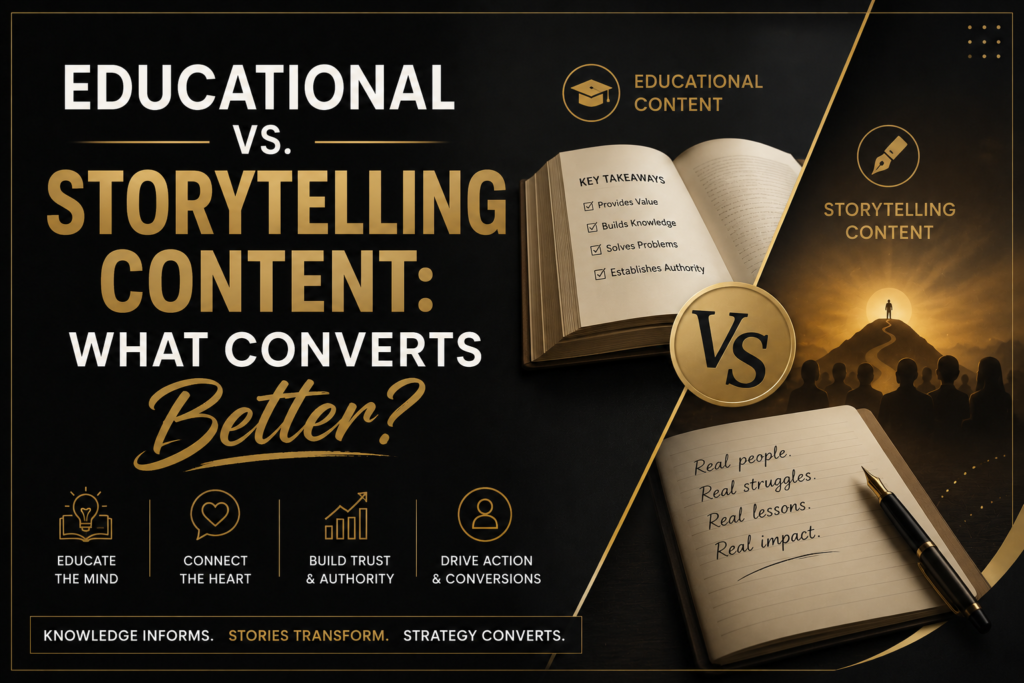
The answer isn’t as simple as choosing one over the other. Educational content positions you as an expert, while storytelling builds trust and emotional connection. The highest-performing content strategies don’t rely exclusively on one format they use both intentionally throughout the buyer’s journey.
In this article, we’ll explore the strengths of educational and storytelling content, when each works best, and how to combine them to attract attention, build authority, and generate more qualified leads.
Why Content That Converts Goes Beyond Engagement
Many creators judge success by likes, comments, and shares. While engagement is useful, it’s not the ultimate goal.
High-converting content achieves outcomes such as:
- Profile visits
- Newsletter sign-ups
- Discovery calls
- Direct messages
- Website visits
- Sales inquiries
A post with 200 likes and five qualified leads is often more valuable than one with 20,000 views and no business impact.
Before deciding which content style performs better, define what “conversion” means for your business.
What Is Educational Content?
Educational content focuses on teaching your audience something valuable.
Its purpose is to solve problems, answer questions, and demonstrate expertise without making an immediate sales pitch.
Common Types of Educational Content
- Step-by-step guides
- Industry tips
- How-to articles
- Checklists
- Frameworks
- Case study breakdowns
- Frequently asked questions
For example:
- “5 LinkedIn Profile Mistakes That Cost You Clients”
- “How to Build a Personal Brand in 90 Days”
- “A Simple Framework for Writing Better LinkedIn Posts”
This type of content provides immediate value and encourages readers to think, “If they give away this much for free, imagine what it’s like to work with them.”
Benefits of Educational Content
Educational content helps you:
- Build credibility
- Demonstrate expertise
- Improve search engine visibility
- Answer customer objections
- Position yourself as a trusted resource
It’s particularly effective for attracting audiences actively searching for solutions to specific problems.
Where Educational Content Falls Short
Although educational content establishes authority, it doesn’t always create an emotional connection.
If every post is a list of tips or a tutorial, your audience may learn from you but never feel connected to you.
Some common limitations include:
Information Overload
The internet already contains countless guides and tutorials. If your content simply repeats what’s already available, it becomes difficult to stand out.
Limited Personal Connection
Educational content often focuses on information rather than personality. Prospects may trust your expertise but still feel they don’t know who you are.
Lower Memorability
People often forget facts but remember stories. Valuable advice may be appreciated today, while a compelling story can remain memorable for months.
What Is Storytelling Content?
Storytelling content communicates ideas through real experiences, challenges, or transformations.
Instead of telling people what to do, you show them what happened.
Stories can come from:
- Personal experiences
- Client success stories
- Business failures
- Career lessons
- Behind-the-scenes moments
- Customer transformations
For example:
Instead of writing:
“Consistency is important on LinkedIn.”
You could write:
“Three years ago, I almost stopped posting because nothing seemed to work. Then I committed to publishing consistently for 90 days. That single decision completely changed how clients discovered my business.”
The lesson becomes far more engaging because readers experience the journey rather than simply receiving advice.
Why Stories Build Trust
Business decisions aren’t purely logical.
People naturally connect with experiences, challenges, and emotions.
Stories help readers:
- Relate to your journey
- Understand your values
- Visualize potential outcomes
- Remember your message
When prospects see themselves in your story, they become more likely to trust your recommendations.
Instead of appearing like another marketer promoting a service, you become someone who understands their challenges.
Storytelling Has Its Limitations Too
Stories aren’t automatically effective.
Poor storytelling can become self-centered or lack practical value.
Common mistakes include:
Making Yourself the Hero
Your audience isn’t looking for someone to admire they’re looking for someone who understands their problems.
Your story should ultimately help the reader, not simply celebrate your achievements.
No Clear Lesson
A story without a takeaway is simply entertainment.
Every story should answer the question:
“So what?”
Readers should leave with an insight they can apply.
Too Much Emotion, Not Enough Value
- Emotion captures attention.
- Education creates action.
- A successful story should include both.
Educational Content vs. Storytelling Content: Which Converts Better?
The truth is that each serves a different purpose.
| Educational Content | Storytelling Content |
| Builds authority | Builds trust |
| Answers questions | Creates emotional connection |
| Improves SEO | Improves memorability |
| Demonstrates expertise | Demonstrates authenticity |
| Generates search traffic | Generates conversations |
Educational content helps prospects believe you know what you’re talking about.
Storytelling helps them believe you’re the right person to solve their problem.
Conversion happens when both trust and credibility exist.
When to Use Educational Content
Educational content works best when your audience needs clarity.
Use it for:
Building Thought Leadership
Share original insights, frameworks, and industry knowledge.
Improving Search Visibility
Search engines reward content that answers users’ questions clearly and comprehensively.
Addressing Objections
Create content answering questions such as:
- How much does it cost?
- Is this worth it?
- How long does it take?
- What results should I expect?
Educational content reduces uncertainty before a sales conversation even begins.
When to Use Storytelling Content
Storytelling performs best when you want people to remember you.
Use it for:
Sharing Client Transformations
Show the journey rather than simply presenting the outcome.
Demonstrating Values
Stories reveal your personality, leadership style, and business philosophy.
Humanizing Your Brand
People connect with people not logos.
Behind-the-scenes stories, lessons learned, and honest reflections help audiences relate to your business.
The Best Strategy: Combine Both
Instead of choosing between education and storytelling, combine them.
A simple framework is:
Hook with a Story
Start with a relatable experience.
Teach the Lesson
Explain what you learned.
Provide Actionable Advice
Give readers practical steps they can implement immediately.
End with a Call to Action
Invite discussion, encourage questions, or direct readers toward your service.
For example:
- Story: “A client came to us frustrated after months of inconsistent LinkedIn posting.”
- Lesson: “They were focusing on quantity instead of strategy.”
- Education: Share a simple content framework.
- CTA: “Want to build a LinkedIn strategy that attracts clients? Let’s connect.”
This approach captures attention, delivers value, and naturally positions you as an expert.
Conclusion
Educational content and storytelling content aren’t competitors—they’re partners.
Educational content builds credibility by demonstrating what you know. Storytelling builds trust by showing who you are and why your expertise matters. On their own, each has strengths and limitations. Together, they create a content strategy that informs, engages, and converts.
If your goal is long-term business growth, don’t limit yourself to one style. Teach your audience something useful, support it with authentic experiences, and always connect your story back to a practical takeaway.
The most effective content doesn’t just get people to click—it gets them to trust you, remember you, and eventually choose to work with you.