
Boosting Your Career with Personal Branding: 8 Practical Tips to Build a Strong Professional Identity
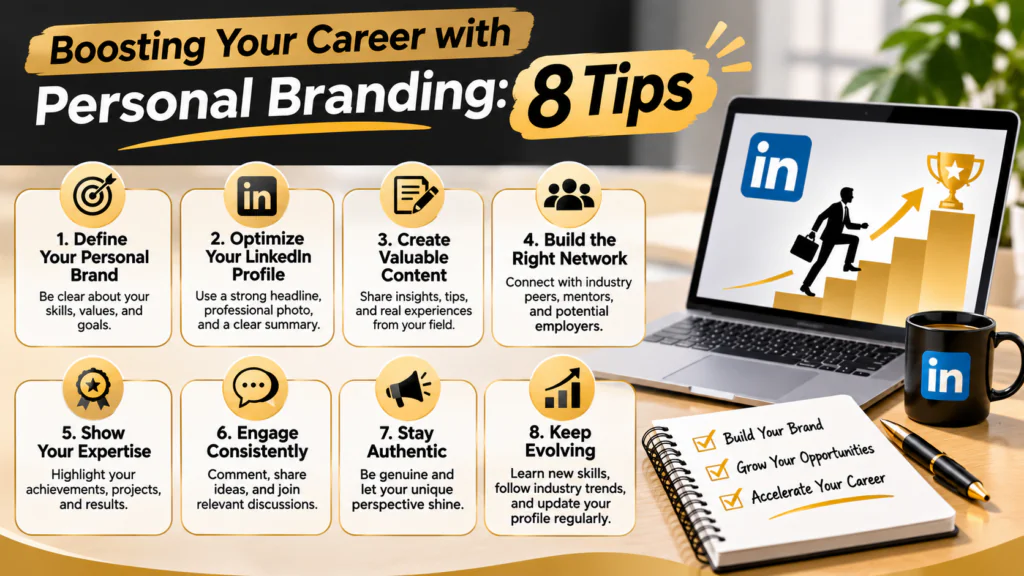
Your skills and experience matter, but how people perceive your professional value matters too. Whether you’re searching for a new job, pursuing a promotion, attracting clients, or building industry connections, a strong personal brand can help you stand out.
Personal branding isn’t about becoming famous or constantly promoting yourself online. It’s about communicating what you do well, what you stand for, and why people should trust your expertise. When you present that message consistently, recruiters, employers, clients, and industry professionals can better understand your value.
A well-developed personal brand also gives your career direction. It helps you identify your strengths, communicate your achievements, build meaningful relationships, and create a professional reputation that supports your long-term goals.
In this guide, you’ll learn how to build a personal brand through eight practical strategies. You’ll also discover how LinkedIn, professional networking, thought leadership, and reputation management can help you create new career opportunities.
What Is Personal Branding and Why Does It Matter for Your Career?
Personal branding is the process of shaping how others recognize, understand, and remember you professionally. It combines your skills, experience, values, personality, achievements, and communication style into a recognizable professional identity.
Think of it as your professional reputation with a clear message behind it. Instead of allowing others to guess what you bring to the table, you communicate your expertise and career value intentionally.
For example, imagine two marketing professionals applying for the same position. Both have similar qualifications and years of experience. However, one maintains a strong LinkedIn profile, shares useful marketing insights, and presents measurable campaign results. The other provides only a basic resume.
The first candidate gives employers more ways to understand their expertise. That’s the practical value of personal branding.
Understanding Personal Branding in a Professional Context
Your personal brand answers three important questions:
- What do you do? Your profession, specialization, and core skills.
- Who do you help? The employers, clients, industries, or audiences that benefit from your expertise.
- Why should people trust you? Your experience, achievements, knowledge, and professional values.
A strong personal brand connects these answers into one clear professional identity.
For instance, a generic description might say, “I’m a marketing professional.” A more focused description could be, “I help B2B companies improve their online visibility through SEO content and digital marketing strategies.”
The second statement communicates a specific skill set and business value. It also helps the right people understand when they might need your expertise.
How Personal Branding Influences Career Growth
A professional reputation can influence how people evaluate your experience and potential. When recruiters, managers, and industry peers understand your strengths, they can identify opportunities that match your abilities.
How does personal branding help career growth?
It helps you communicate your professional value, improve industry visibility, build credibility, strengthen relationships, and attract opportunities that align with your career goals.
Here are several ways it can support your development:
- Better professional visibility: People can find and recognize your expertise more easily.
- Stronger credibility: Your achievements and insights provide evidence of your knowledge.
- More relevant opportunities: Recruiters and potential clients can understand where your skills fit.
- Meaningful networking: A clear professional identity gives people a reason to connect.
- Career flexibility: A recognizable reputation can support career transitions and new specializations.
- Greater professional confidence: Understanding your strengths makes it easier to communicate your value.
Personal branding doesn’t guarantee a promotion or job offer. However, it helps you present your qualifications more clearly when opportunities arise.
Personal Branding vs. Professional Reputation: What’s the Difference?
These concepts work together, but they aren’t exactly the same.
| Personal branding | Professional reputation |
| How you intentionally communicate your professional identity | How others perceive your professional behavior and work |
| Includes your LinkedIn profile, portfolio, content, and positioning | Includes reliability, performance, integrity, and relationships |
| Gives people a clear understanding of your expertise | Builds trust through consistent actions |
| Requires deliberate communication | Develops through professional experiences |
Your personal brand makes your professional value visible. Your reputation determines whether people trust that message.
This is why professional reputation management matters. You must ensure that your online presence reflects the quality of your actual work.
Who Benefits Most from Building a Personal Brand?
Personal branding can support professionals at different career stages.
- Students and recent graduates: Demonstrate skills, projects, internships, and career interests.
- Job seekers: Make their experience easier for recruiters to understand.
- Experienced employees: Build recognition within their industries and organizations.
- Freelancers and consultants: Communicate their specialization and attract suitable clients.
- Business owners and founders: Establish credibility and strengthen professional relationships.
- Executives and industry leaders: Share their perspectives and demonstrate thought leadership.
You don’t need years of experience to start. A clear professional identity and evidence of your developing skills provide a useful foundation.
8 Practical Tips to Boost Your Career with Personal Branding
Building a professional identity takes more than updating your LinkedIn headline. You need a clear message, a recognizable area of expertise, and consistent actions that support your reputation.
The following personal branding strategies will help you develop a professional presence that reflects your career goals.
Identify Your Professional Strengths, Skills, and Values
Before communicating your expertise, understand what makes you valuable. Your personal brand should reflect your actual abilities rather than an image you think employers want to see.
Start by examining your professional experience, education, projects, and accomplishments. Look for patterns that reveal your strongest skills.
For example, a digital marketer might discover that their strongest abilities include SEO research, content planning, and website optimization. These skills can form the foundation of a personal brand focused on organic growth.
How Do You Identify Your Unique Professional Strengths?
Use these practical steps:
1. Review your previous work.
Look at projects, assignments, campaigns, and responsibilities you’ve handled. Identify the tasks where you consistently produced useful results.
2. Recognize your transferable skills.
Communication, problem-solving, project management, leadership, and analytical thinking can strengthen your professional identity across different industries.
3. Ask for honest feedback.
Speak with managers, colleagues, mentors, or clients. Ask which abilities they value most in your work.
4. Examine your achievements.
Don’t focus only on job titles. Consider measurable results, successful projects, improvements, and challenges you’ve solved.
5. Identify your professional values.
Think about what matters most in your work. You might value creativity, accuracy, collaboration, reliability, or continuous learning.
Use the following table to organize your findings:
| Area | Questions to consider | Example |
| Technical skills | What can you do well? | SEO, web analytics |
| Soft skills | How do you work with others? | Communication, teamwork |
| Experience | What have you accomplished? | Improved website traffic |
| Values | What guides your decisions? | Transparency, quality |
| Interests | Which topics motivate you? | Digital marketing |
Expert tip: Don’t list every skill you’ve ever learned. Focus on the strengths that support your desired career direction. A focused brand is easier to understand and remember.
Define Your Personal Brand and Professional Positioning
Once you understand your strengths, decide how you want others to recognize your expertise.
Professional positioning gives your personal brand direction. It connects your abilities with the problems you can solve and the audience you want to reach.
For example, consider these two descriptions:
- “I’m a graphic designer.”
- “I help small businesses create consistent visual identities through branding and digital design.”
The second description communicates a specific audience, service, and professional value.
How to Create a Personal Brand Statement
A personal brand statement is a short introduction that explains your expertise and the value you offer.
You can use this simple framework:
I help [target audience] achieve [specific outcome] through [your skills or expertise].
Examples:
- SEO professional: I help businesses improve organic visibility through strategic keyword research and content optimization.
- HR professional: I help organizations strengthen recruitment processes and build effective workplace teams.
- Graphic designer: I help growing brands communicate their identity through clear and consistent visual design.
- Project manager: I help teams deliver complex projects through structured planning and effective communication.
Your statement should sound natural. Avoid exaggerated claims or promises you cannot support.
Align Your Personal Brand with Your Career Goals
Your professional identity should support the direction you want to take.
If you want to become a marketing manager, highlight leadership, campaign planning, analytics, and team collaboration. If you’re pursuing freelance opportunities, emphasize your specialization, portfolio, client outcomes, and service knowledge.
A useful positioning exercise involves comparing your current strengths with your future requirements.
| Current professional strength | Career goal | Branding focus |
| Content writing | Content strategist | Content planning and audience research |
| SEO execution | SEO manager | Strategy, analytics, and leadership |
| Graphic design | Creative director | Brand strategy and creative direction |
| Sales experience | Business development manager | Negotiation and relationship building |
Your brand can evolve as your skills and responsibilities grow. It doesn’t need to remain fixed throughout your career.
Understand Your Target Audience and Industry
A personal brand becomes more effective when it reaches the right people. You don’t need everyone to notice your work. You need the people who understand its professional value.
Start by identifying your intended audience. Depending on your goals, this might include recruiters, hiring managers, business owners, potential clients, industry experts, or professional communities.
Identify the People You Want to Reach
Different audiences look for different evidence.
| Audience | What they want to understand | What you should highlight |
| Recruiters | Qualifications and role suitability | Skills, experience, achievements |
| Hiring managers | Your ability to solve workplace problems | Relevant projects and measurable results |
| Potential clients | Whether you can deliver useful outcomes | Services, case studies, testimonials |
| Industry professionals | Your knowledge and professional interests | Insights, discussions, expertise |
| Business leaders | Your strategic and commercial value | Leadership, results, and decision-making |
Understanding these differences helps you create more relevant content and professional messages.
Research Industry Trends and In-Demand Skills
Your personal brand should reflect the needs of your industry. Follow relevant professional organizations, publications, companies, and experienced practitioners.
For example, an SEO professional should understand more than keyword research. Their expertise may also involve search intent, technical SEO, content quality, structured data, website performance, and analytics.
Useful research sources include:
- LinkedIn for professional discussions and industry updates.
- Google Search Central for official search documentation.
- U.S. Bureau of Labor Statistics for occupational information and employment outlook.
- Harvard Business Review for leadership and workplace insights.
Don’t simply copy what successful professionals publish. Study how they explain their work, support their opinions, and communicate with their audiences.
Instead, identify unanswered questions and share your own informed perspective. That’s how you develop a more distinctive professional voice.
Optimize Your LinkedIn Profile to Showcase Your Expertise
LinkedIn gives professionals a dedicated space to communicate their experience, connect with industry peers, and share knowledge.
However, simply creating an account isn’t enough. Your profile should explain who you are, what you do, and why your experience matters.
A thoughtful LinkedIn personal branding strategy makes your profile more useful to recruiters, hiring managers, clients, and professional connections.
Write a Professional LinkedIn Headline
Your headline appears alongside your name in many LinkedIn interactions. It should communicate your professional focus without relying on vague descriptions.
Compare these examples:
- Generic: Marketing Professional
- More specific: SEO Specialist | Content Strategy | Organic Growth
- Client-focused: Helping B2B Brands Improve Search Visibility Through SEO and Content Marketing
Choose a headline that accurately reflects your current skills and career direction.
Don’t add services or qualifications you cannot genuinely support.
Create a Compelling LinkedIn About Section
The About section gives you room to explain your professional story.
Instead of repeating your resume, use this space to communicate your expertise, working approach, achievements, and interests.
A useful structure includes:
- A short introduction explaining your professional focus.
- Your main skills and areas of specialization.
- Relevant achievements or project experience.
- The type of challenges you can help solve.
- Your professional interests or future direction.
- A suitable invitation to connect.
For example:
“I’m an SEO professional focused on helping businesses improve their online visibility through content optimization and strategic keyword research. My work involves understanding search intent, identifying content opportunities, and developing practical strategies that support sustainable organic growth.”
This gives visitors a clearer picture of your expertise.
Highlight Your Experience, Skills, and Achievements
Your Experience section should explain what you accomplished, not just what your job required.
Compare these descriptions:
| Weak description | Stronger description |
| Responsible for SEO activities | Conducted keyword research and developed content optimization recommendations |
| Managed social media accounts | Planned social media content and monitored audience engagement |
| Worked on website development | Coordinated website improvements focused on usability and responsive design |
Whenever reliable data exists, include measurable results. Explain the time period, project scope, and your contribution so readers can understand the achievement.
You can also use LinkedIn’s Featured section to showcase relevant work samples, presentations, articles, certifications, or portfolio links.
Use Recommendations, Endorsements, and a Professional Profile Photo
Recommendations provide context about your working relationships and professional qualities.
Ask people who have directly worked with you to describe specific contributions. A detailed recommendation about your problem-solving skills is more meaningful than a generic statement.
Also, use a clear and professional profile photo. Your banner should support your professional identity through relevant imagery, messaging, or specialization.
How can LinkedIn improve your professional brand?
It helps you present your expertise, publish professional insights, connect with relevant people, showcase achievements, and maintain a consistent professional presence.
Share Valuable Content to Build Professional Credibility
A complete profile explains your experience. Valuable content gives people opportunities to see how you think.
Sharing useful information can help you establish credibility and participate in industry conversations. You don’t need to publish complicated research or become a full-time creator.
Start with knowledge you already use in your professional work.
Share Industry Insights and Practical Knowledge
Think about the questions people regularly ask in your industry.
An SEO specialist could write about keyword mapping, search intent, technical website issues, or content optimization. An HR professional might discuss interview preparation, employee onboarding, or recruitment challenges.
Useful content ideas include:
- Practical tutorials and step-by-step guides.
- Industry news with informed commentary.
- Lessons from completed projects.
- Common professional mistakes and their solutions.
- Tools and resources that improve workplace efficiency.
- Answers to frequently asked industry questions.
Your content should solve a real problem or explain something clearly.
Publish Lessons from Your Professional Experience
First-hand observations can make your content more useful.
For example, instead of publishing “SEO is important for business growth,” explain how you approach a website content audit. Discuss how you identify missing topics, evaluate search intent, and organize pages into relevant content clusters.
Be transparent about your role and results. Never present another person’s work as your own.
You can also share lessons from projects that didn’t go as planned. Explain the challenge, what you learned, and what you would change next time.
That approach demonstrates professional judgment rather than simply promoting achievements.
Create a Consistent Content Strategy
You don’t need to publish every day. A manageable schedule is more valuable than an ambitious schedule you cannot maintain.
Consider these content categories:
| Content type | Example | Purpose |
| Educational | How to conduct keyword research | Demonstrate knowledge |
| Experience-based | Lessons from a website audit | Show practical understanding |
| Industry insights | Changes in digital marketing | Share informed perspectives |
| Professional stories | Lessons from a challenging project | Communicate experience |
| Discussion posts | Questions about industry practices | Encourage meaningful conversations |
Choose topics that align with your professional positioning.
Engage in Relevant Industry Discussions
Publishing content is only one part of professional visibility. Meaningful engagement also matters.
Comment on relevant posts with useful observations, ask thoughtful questions, and contribute to discussions in your field.
Avoid generic comments such as “Great post!” every time. Explain which point you found useful or add an additional perspective.
Over time, these interactions can help people recognize your interests and professional knowledge.
Build Meaningful Professional Relationships Through Networking
A recognizable personal brand can introduce people to your expertise. However, professional relationships help turn that visibility into meaningful connections.
Networking isn’t about collecting hundreds of contacts. It’s about developing genuine relationships with people who share professional interests or complementary goals.
Connect with Industry Professionals on LinkedIn
Start with people whose work relates to your career interests.
These might include:
- Professionals working in your desired role.
- Recruiters specializing in your industry.
- Former colleagues and classmates.
- Industry experts and mentors.
- Potential clients and business partners.
When sending a connection request, include a short personal message.
For example:
“Hi Sarah, I enjoyed reading your recent post about content strategy. I’m also interested in SEO and content development. I’d be happy to connect and follow your industry insights.”
A relevant message creates a more natural starting point than an immediate sales pitch.
Attend Industry Events, Webinars, and Conferences
Online and in-person events provide opportunities to learn from experienced professionals.
Attend discussions related to your career goals. Ask relevant questions and follow up with people whose insights you found valuable.
You can also participate in professional groups, industry associations, and specialist communities.
For example, someone working in digital marketing might join SEO communities, attend marketing webinars, or participate in discussions about Google Search updates.
Build Relationships Before Asking for Opportunities
One common networking mistake is contacting people only when you need a job or referral.
Instead, develop relationships through regular professional interaction. Share useful resources, congratulate people on meaningful achievements, and offer assistance when appropriate.
Expert tip: A strong professional network grows through mutual value. Focus solution on being helpful and reliable rather than treating every connection as a potential opportunity.
Showcase Your Achievements and Build Trust
People understand your expertise more easily when they can see evidence of your work.
Your personal brand should include proof that supports your professional claims. This might involve completed projects, measurable results, testimonials, certifications, or practical examples.
Create a Professional Portfolio or Personal Website
A portfolio gives you more control over how you present your experience.
It can include:
- A professional introduction.
- Your core skills and specializations.
- Selected projects and case studies.
- Testimonials from clients or colleagues.
- Relevant certifications and qualifications.
- Contact information and professional links.
For example, an SEO professional could showcase a website audit, keyword research framework, content strategy, or technical SEO recommendations.
Remember to remove confidential information and obtain permission before sharing client work.
Highlight Measurable Career Achievements
Specific results communicate more than broad claims.
Instead of saying, “I improved website performance,” explain what you changed and how you evaluated the outcome.
A useful achievement statement follows this structure:
Challenge + Action + Result
Example:
“A company struggled with inconsistent blog traffic. I reviewed its content structure, identified search intent gaps, and recommended improvements to existing articles.”
If you have verified performance data, include it. For example, you might report a documented increase in organic clicks over a specified period.
Don’t invent percentages or attribute team achievements entirely to yourself. Accurate context strengthens credibility.
Collect Testimonials and Professional Recommendations
Testimonials help explain how others experience working with you.
Ask clients, supervisors, or colleagues for feedback about specific contributions.
A useful testimonial might discuss your reliability, communication, technical knowledge, or ability to solve a particular problem.
For example:
“She organized our content workflow, communicated project updates clearly, and helped the team maintain consistent publishing standards.”
Always seek permission before publishing testimonials. Present them accurately without changing their intended meaning.
Demonstrate Your Expertise Through Real-World Examples
Case studies can connect your skills with practical outcomes.
A strong professional case study should explain:
- Background: What was the project or business situation?
- Challenge: What problem needed attention?
- Approach: What actions did you take?
- Outcome: What changed after the work?
- Learning: What would you repeat or improve?
You don’t need a major corporate project to demonstrate experience. A university assignment, volunteer project, personal website, or independent research project can also provide evidence of your abilities.
Maintain a Consistent Personal Brand Both Online and Offline
Your personal brand doesn’t end when someone closes LinkedIn. People also form opinions through your communication, workplace behavior, reliability, and professional decisions.
Consistency means making sure your actions support the message you communicate.
Keep Your Professional Profiles Consistent
Review your LinkedIn profile, personal website, portfolio, and other relevant professional accounts.
Check that your:
- Job titles accurately reflect your experience.
- Professional descriptions communicate a consistent focus.
- Skills match your actual abilities.
- Profile photographs and visual elements look professional.
- Contact information remains current.
- Public content reflects your professional values.
You don’t need identical content across every platform. However, your central professional identity should remain recognizable.
Communicate with Confidence and Professionalism
Communication skills play an important role in professional reputation.
Pay attention to how you write emails, participate in meetings, explain ideas, and respond to feedback.
Clear communication helps colleagues understand your contributions. Listening carefully also shows that you respect other perspectives.
If you disagree with someone, explain your reasoning respectfully. Avoid personal attacks or impulsive online responses.
Protect Your Digital Footprint
Your digital footprint includes information and activity associated with your online presence.
Public posts, comments, professional profiles, portfolio pages, and published contributions can influence how others perceive you.
Practice professional reputation management by reviewing your public accounts and checking how your name appears in search results.
Useful habits include:
- Review privacy settings on social platforms.
- Remove outdated professional information.
- Avoid sharing confidential workplace details.
- Check the accuracy of publicly displayed qualifications.
- Correct misleading information when possible.
- Think carefully before posting emotionally charged comments.
Your online presence should reflect your professional standards even when you’re not actively looking for a job.
Review and Update Your Personal Brand as Your Career Evolves
Your professional identity should grow alongside your experience.
A junior employee may initially focus on technical skills and project contributions. After gaining leadership experience, their brand might expand toward team management, strategic planning, and business outcomes.
Review your positioning regularly, especially after completing major projects, earning new qualifications, changing industries, or taking on additional responsibilities.
The goal isn’t to change your identity constantly. It’s to keep your professional message accurate and relevant.
Common Personal Branding Mistakes That Can Hurt Your Career
Even experienced professionals can weaken their personal brand through inconsistent communication or unrealistic self-promotion.
Avoid these common mistakes when developing your professional identity.

Trying to Appeal to Everyone Instead of a Specific Audience
A broad message makes it difficult for people to understand your specialization.
For example, claiming expertise in every area of digital marketing can make your positioning less clear.
Instead, identify your strongest areas and communicate them directly. You can expand your professional focus as your experience develops.
Focusing on Self-Promotion Instead of Providing Value
Constantly talking about achievements can make your content feel repetitive.
Balance professional updates with educational information, industry insights, useful resources, and lessons from your experience.
People should gain something from following your work.
Having Inconsistent Professional Profiles
If your LinkedIn profile describes you as an SEO specialist while your portfolio focuses entirely on graphic design, visitors may struggle to understand your professional direction.
Review your public profiles and make sure they communicate an accurate, consistent identity.
Ignoring Networking and Audience Engagement
Publishing content without interacting with others can limit meaningful professional relationships.
Take time to respond to comments, participate in industry discussions, and connect with relevant professionals.
Networking requires genuine interaction, not just visibility.
Making Claims Without Demonstrating Real Achievements
Statements such as “industry-leading expert” or “top-performing professional” need credible evidence.
Use specific examples, qualifications, testimonials, and documented outcomes instead.
A modest but well-supported professional claim is more convincing than an exaggerated one.
How to Measure the Success of Your Personal Branding Efforts
Personal branding takes time, so you need ways to evaluate whether your efforts are creating meaningful progress.
Don’t measure success only through follower counts or likes. Focus on indicators connected to your career goals.
Track LinkedIn Profile Views and Search Appearances
Review available LinkedIn profile analytics to understand whether more relevant people are discovering your profile.
Pay attention to search appearances, profile views, and the professional roles or industries represented in available audience insights.
An increase in views can indicate greater visibility. However, relevant visitors matter more than raw numbers.
Monitor Relevant Connections and Engagement
Look at the quality of your professional interactions.
Consider:
- Are you connecting with people in your target industry?
- Are professionals engaging with your subject-specific content?
- Are you receiving relevant questions or messages?
- Are your discussions leading to meaningful relationships?
These indicators help you evaluate whether your content reaches the intended audience.
Measure Portfolio Traffic and Professional Inquiries
If you maintain a personal website, use analytics tools such as Google Analytics 4 and Google Search Console.
You can review:
- Website visits and traffic sources.
- Portfolio page engagement.
- Search impressions and clicks.
- Contact form submissions.
- Inquiries related to your professional services.
Make sure you respect visitor privacy and follow applicable data protection requirements.
Evaluate Career Opportunities and Professional Referrals
Ultimately, your personal brand should support your career goals.
Monitor whether your professional visibility contributes to:
- Relevant job interviews.
- Recruiter inquiries.
- Internal promotion discussions.
- Freelance or consulting opportunities.
- Speaking invitations.
- Professional referrals.
- Meaningful mentorship relationships.
Not every opportunity will result directly from personal branding. However, tracking these outcomes helps you understand whether your strategy supports your wider career development.
A simple measurement framework can help:
| Metric | What it tells you | Review frequency |
| LinkedIn profile views | Professional visibility | Monthly |
| Relevant connections | Network development | Monthly |
| Content engagement | Audience interest | Monthly |
| Portfolio visits | Interest in your work | Monthly |
| Professional inquiries | Potential opportunities | Quarterly |
| Interviews and referrals | Career-related outcomes | Quarterly |
Use these measurements to improve your strategy rather than chasing numbers without a clear purpose.
Final Thoughts on Boosting Your Career with Personal Branding
Your professional skills deserve to be recognized. However, people need a clear understanding of your expertise before they can connect you with relevant opportunities.
Personal branding helps you communicate that value through your professional identity, LinkedIn presence, industry contributions, networking, and real-world achievements.
Start with the basics. Identify your strongest skills, define your professional positioning, and improve your LinkedIn profile. Then share useful insights, develop meaningful relationships, and demonstrate your expertise through actual work.
Most importantly, keep your message authentic. Your personal brand should reflect who you are professionally and the value you genuinely bring.
Frequently Asked Questions
How Does Personal Branding Help Your Career?
Personal branding helps you communicate your expertise, achievements, professional values, and career interests. It can improve your visibility among recruiters, hiring managers, clients, and industry professionals.
A clear personal brand also helps people understand what you do and how your skills can solve relevant problems. This can support networking, career transitions, and professional development.
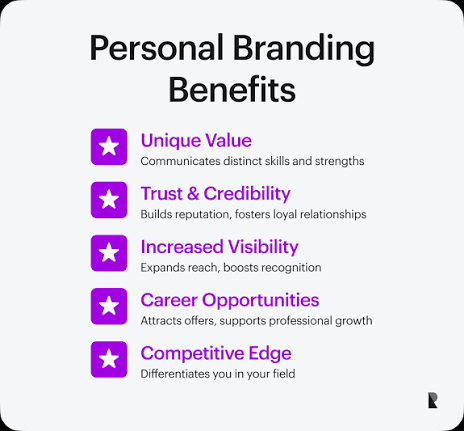
What Are the Benefits of Personal Branding?
The main benefits of personal branding include:
- Greater professional visibility.
- Stronger credibility and trust.
- Better networking opportunities.
- Clearer career positioning.
- Increased recognition within your industry.
- More relevant job and business opportunities.
- A stronger professional online presence.
These benefits develop through consistent communication and credible professional contributions.
How Can I Build a Personal Brand with No Experience?
Start by identifying your skills, interests, education, and career goals. You can demonstrate your abilities through academic projects, personal projects, internships, volunteer work, and relevant certifications.
Create a professional LinkedIn profile and share useful information about the field you’re learning.
You don’t need an impressive job title to demonstrate curiosity, practical knowledge, and a willingness to improve.
Which Social Media Platform Is Best for Personal Branding?
The right platform depends on your profession and target audience.
LinkedIn is particularly useful for professional networking, recruitment, business discussions, and industry content. Instagram can support visual professionals, designers, and creators. YouTube works well for people who explain complex topics through video.
Choose platforms where your intended audience already spends time. Maintaining a focused presence on one or two relevant platforms is often more manageable than trying to be active everywhere.
How Long Does It Take to Build a Strong Personal Brand?
There isn’t a universal timeline for building a personal brand. Progress depends on your industry, experience, professional network, content quality, and consistency.
You can improve your professional positioning quickly by updating your profile and clarifying your expertise. However, building a trusted reputation requires repeated evidence of your skills, reliability, and professional value.
Focus on sustainable progress rather than expecting immediate results.