
How to Generate Sales Leads
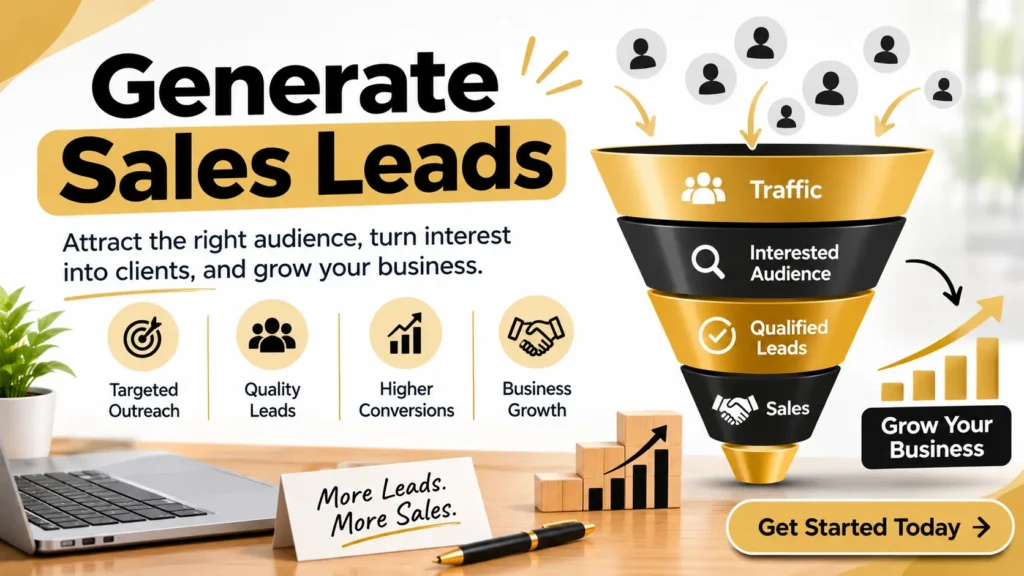
Generating sales leads helps businesses find people who are interested in their products or services. However, attracting visitors isn’t enough. You need to reach the right audience, understand their needs, and turn their interest into real sales opportunities.
Whether you run a small business or manage a B2B company, the right strategies can help you build a consistent sales pipeline. From LinkedIn prospecting to email marketing, several methods can bring potential customers closer to your business.
In this guide, you’ll discover practical ways to generate sales leads, find qualified prospects, and convert more opportunities into customers.
What Are Sales Leads?
A sales lead is a person or business that shows potential interest in your products or services. They might visit your website, fill out a contact form, download a guide, or respond to an outreach email.
Sales leads generally fall into three categories:
- Cold leads: People who haven’t interacted with your business or shown direct interest.
- Warm leads: Prospects who have engaged with your content or brand.
- Hot leads: People who show strong buying interest and may be ready to purchase.
Understanding these categories helps your sales team prioritize its efforts. Instead of contacting everyone equally, you can focus on prospects who have a stronger chance of becoming customers.
Understand Your Ideal Customer Before Generating Leads
Before starting any campaign, identify the people or businesses most likely to need your services. This is where an ideal customer profile (ICP) becomes important.
For B2B businesses, an ICP describes the companies that best match your offering.
Consider these factors:
- Industry and company size.
- Business location.
- Employee count.
- Potential budget.
- Decision-makers and job titles.
- Common business challenges.
For example, a digital marketing agency might target small businesses that struggle with website traffic and online visibility.
Understanding these requirements makes prospecting easier. It also helps you avoid spending time on businesses that don’t need your services.
10 Effective Strategies for Generating Sales Leads
Use SEO and Content Marketing
Search engine optimization helps your website attract people who already search for solutions related to your services. Instead of contacting every prospect individually, you can create useful content that brings interested visitors to your website.
Start by researching relevant keywords and publishing helpful articles around your industry.
For example, an agency offering marketing services could publish guides about SEO, customer acquisition, and online marketing strategies.
To improve results:
- Write blog posts that answer real customer questions.
- Create dedicated service pages.
- Use relevant internal links.
- Optimize titles and headings.
- Add clear calls to action.
- Update outdated information.
Google recommends publishing helpful, original, people-first content rather than creating pages solely to manipulate search rankings. Google Search Central.
Build Targeted Email Marketing Campaigns
Email marketing remains a practical way to connect with potential customers. However, sending the same message to hundreds of people rarely creates meaningful conversations.
Effective email lead generation strategies start with understanding your prospects.
Follow these steps:
- Identify businesses that match your target audience.
- Find relevant decision-makers.
- Research their business challenges.
- Write personalized emails.
- Explain how your service can help.
- Include one clear call to action.
For example, if a company has an outdated website, you could explain how better design and mobile usability may improve its online experience.
Keep emails short and relevant. Also, follow applicable email marketing and privacy laws.
Use LinkedIn for B2B Lead Generation
LinkedIn is particularly useful for businesses targeting founders, executives, marketing managers, and other professionals.
Successful lead generation through LinkedIn requires a focused approach. Start by improving your profile and clearly explaining the services you offer.
Then:
- Search for companies in your target industry.
- Identify relevant decision-makers.
- Review their profiles and business activities.
- Connect with suitable prospects.
- Engage with their content.
- Send personalized messages.
LinkedIn Sales Navigator can help you filter prospects by job title, industry, company size, and location.
For example, a B2B agency could search for marketing managers at small and medium-sized companies in the United States.
Rather than sending generic sales messages, explain how your service addresses a specific business problem.
Create Effective Website Landing Pages
Your website should make it easy for interested visitors to contact your business. This is an important part of website lead generation.
A landing page focuses on one offer and encourages visitors to take a specific action.
To understand how to convert website visitors into leads, include these important elements:
- A clear and engaging headline.
- A short explanation of your service.
- A visible contact form.
- Customer testimonials or genuine reviews.
- A strong call-to-action button.
- A mobile-friendly layout.
For example, a website development agency could offer a free initial consultation through a dedicated landing page.
Keep the form simple. Asking for too much information can discourage visitors from completing it.
Leverage Social Media Marketing
Social media helps businesses reach potential customers, share expertise, and build relationships.
Choose platforms according to your target audience. LinkedIn works well for professional networking, while Instagram and Facebook can support different consumer and business markets.
Share useful content, answer customer questions, publish short videos, and participate in relevant discussions.
You can also direct interested followers toward your website or service pages.
Remember, engagement alone doesn’t guarantee sales. Focus on attracting people who genuinely need your products or services.

Offer Valuable Free Resources
Lead magnets give visitors a useful reason to share their contact information.
Examples include:
- Free ebooks.
- Downloadable checklists.
- SEO audit templates.
- Educational webinars.
- Industry reports.
- Free consultations.
For example, an SEO agency could offer a website audit checklist. Visitors download the resource by submitting their business email.
You can then share relevant information and introduce your services when appropriate.
Build Referral and Business Partnerships
Existing customers and professional contacts can introduce your business to new prospects.
For example, a website development agency could partner with an SEO company. Both businesses serve similar clients but offer different services.
You can also encourage satisfied customers to recommend your services.
Build genuine relationships and make referrals easy. Explain what type of customer you want to reach and how your business can help.
Use Paid Advertising
Google Ads can help businesses reach people searching for specific products or services.
For example, a marketing agency could target searches related to B2B lead generation services.
For better results:
- Choose relevant keywords.
- Create focused advertisements.
- Send visitors to matching landing pages.
- Track form submissions.
- Review lead quality and campaign costs.
Don’t focus only on clicks. Measure how many visitors become qualified prospects.
Attend Industry Events and Networking Meetings
Business conferences, professional communities, and trade shows create opportunities to meet potential customers.
Prepare a short introduction about your business. Ask people about their challenges and listen before presenting your services.
After meeting someone interested, follow up with a personalized message.
Building trust takes time, but professional relationships can lead to valuable business opportunities.
Consider Professional Lead Generation Services
Some businesses lack the time or resources to manage prospect research and outreach internally.
In these situations, outsourcing can help. Professional providers may support prospect identification, email outreach, LinkedIn prospecting, and appointment setting.
Before hiring an agency, check its industry experience, lead qualification process, reporting methods, and data practices.
Remember, a large contact list doesn’t automatically mean quality leads.
How to Qualify and Manage Sales Leads
Generating inquiries is only the beginning. You must identify which prospects have genuine buying potential.
The BANT framework can help evaluate sales opportunities:
| Factor | What it means |
| Budget | Can the prospect afford the service? |
| Authority | Can they influence the buying decision? |
| Need | Does your service solve their problem? |
| Timeline | When do they plan to purchase? |
You should also distinguish between Marketing Qualified Leads (MQLs) and Sales Qualified Leads (SQLs).
An MQL has shown meaningful marketing interest. An SQL has been reviewed and is considered ready for direct sales engagement.
Once qualified, organize prospects using customer relationship management software.
Tools such as HubSpot CRM, Salesforce, and Zoho CRM help businesses track contacts, conversations, sales stages, and follow-up activities.
How to Measure Lead Generation Performance
Tracking results helps you understand which strategies produce valuable opportunities.
Focus on these important metrics:
| Metric | What it measures |
| Leads generated | Total new prospects |
| Conversion rate | Percentage of visitors who become leads |
| Cost per lead | Average spending to acquire one lead |
| Qualified leads | Prospects matching your sales criteria |
| Customer conversion rate | Percentage of leads becoming customers |
For example, if 1,000 visitors generate 40 inquiries, your website lead conversion rate is 4%.
Conversion rate formula:
Lead Conversion Rate = (Total Leads ÷ Total Visitors) × 100
Review these numbers regularly. A campaign producing fewer but better-qualified prospects may deliver greater business value.
Conclusion
Learning how to generate sales leads requires the right audience, effective marketing channels, and consistent follow-up. SEO, LinkedIn, email marketing, social media, and professional networking can all help businesses find potential customers.
However, generating more contacts shouldn’t be your only goal. Focus on attracting qualified prospects who genuinely need your services. With a clear strategy and regular performance tracking, you can build stronger customer relationships and create more sales opportunities
Frequently Asked Questions
How Can Beginners Generate Sales Leads?
Beginners can start with LinkedIn, Google Search, social media, and professional networking. Identify a target audience and approach businesses that genuinely need your services.
How to Generate B2B Leads Online?
Use LinkedIn prospecting, targeted email campaigns, SEO, landing pages, and relevant business directories. Focus on reaching decision-makers within your target companies.
How Can I Generate Sales Leads Without Spending Money?
Publish helpful blog posts, optimize your LinkedIn profile, participate in industry communities, request referrals, and share useful resources on social media.
What Is the Best Way to Convert Leads Into Customers?
Understand each prospect’s needs, explain your solution, answer their questions, and follow up professionally. Building trust throughout the sales process improves your chances of conversion.