
How LinkedIn Recommendations Influence Buying Decisions in B2B Markets
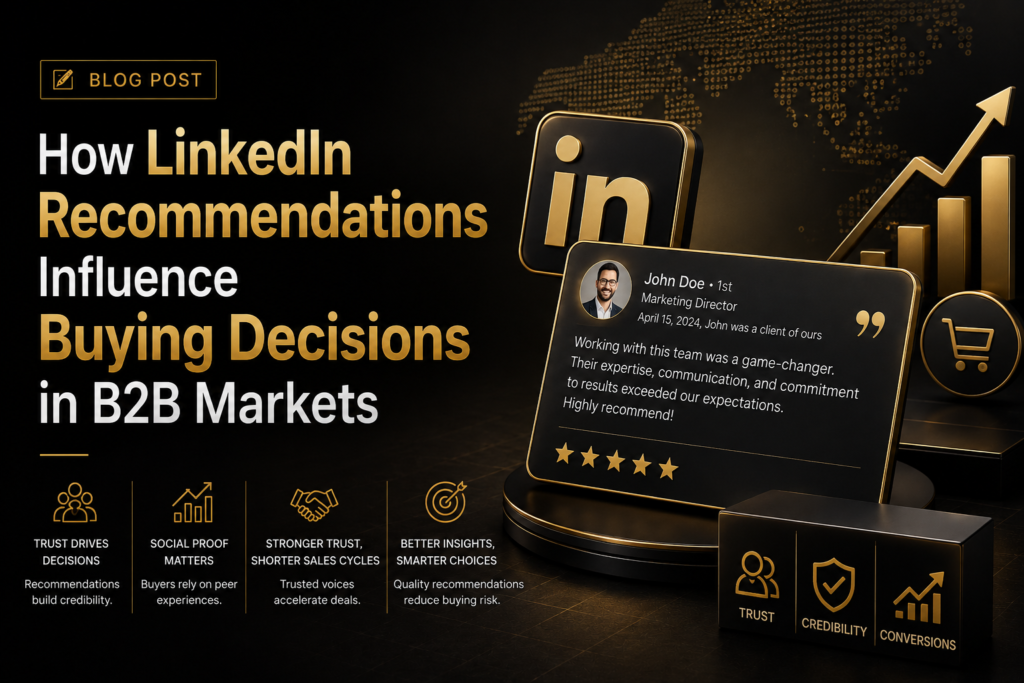
In B2B markets, buyers rarely make decisions based on a sales pitch alone. Before scheduling a call, requesting a demo, or even signing a contract, they spend time researching the people and companies behind the offer. They review websites, consume content, check social proof, and increasingly, examine LinkedIn profiles.
One of the most overlooked trust signals on LinkedIn is the recommendation section. While many professionals focus on content creation and profile optimization, LinkedIn recommendations often provide the proof buyers need to feel confident moving forward. When prospects see genuine endorsements from clients, colleagues, and partners, they gain reassurance that your expertise delivers real-world results and you are trustworthy.
According to LinkedIn research, professional peer reviews and recommendations are among the strongest drivers of trust in B2B purchasing decisions, with more than half of surveyed buyers saying peer reviews help build trust in a solution. Luckily in this guide, you will get to know why it is important to get recommendations on your LinkedIn profile.
What Are LinkedIn Recommendations and How Do They Work?
LinkedIn recommendations are written testimonials that appear on a user’s profile. They are provided by colleagues, managers, clients, business partners, or anyone who has worked directly with that person.
If you have ever wondered how does LinkedIn recommendations work, the process is straightforward. A user requests a recommendation from a connection and once written, the recommendation appears in the Recommendations section of their profile after approval.
Unlike endorsements, which simply validate a skill with one click, recommendations offer detailed insights into someone’s expertise, professionalism, communication style, and results. This added context makes them significantly more valuable for B2B buyers evaluating potential vendors or partners.
When prospects browse your profile, your recommendations on your LinkedIn profile serve as third-party validation that supports the claims made in your headline, experience section, and content. It clearly highlights that you are capable of doing the best work for them also.
Why B2B Buyers Check Recommendations on LinkedIn Before Contacting You
Modern B2B buyers conduct extensive research before engaging with a vendor. In many cases, the buying journey begins long before the first conversation takes place. Research consistently shows that professional peer reviews rank among the most trusted sources of information when evaluating new business solutions. Buyers want to hear from people who have already worked with a provider before making their own decision.
This behavior is driven by risk reduction.They don’t want to invest in a person who lacks hard work or professionalism. Buyers want evidence that others have achieved positive outcomes before committing time, money, and organizational resources.
A strong recommendation section helps answer critical buyer questions:
- Can this person deliver better results?
- Have others had a positive experience working with them?
- Are they credible and trustworthy in their industry?
- Would I feel confident recommending them?
When recommendations address these concerns, they help move buyers closer to a purchasing decision.
How LinkedIn Recommendations Influence Buying Decisions in B2B Markets
Trust has become one of the most important factors in B2B sales. When multiple vendors offer similar services, it becomes difficult for buyers to choose one so they often choose the option that feels safest and most credible. That’s where LinkedIn recommendations become powerful.
Instead of hearing you explain your value, prospects hear it directly from clients, partners, and colleagues. Therefore, recommendations provide social media proof from real people who have experienced your work firsthand.
For consultants, agencies, coaches, SaaS providers, and service-based businesses, recommendations help establish:
- Credibility
- Expertise
- Reliability
- Results
- Trustworthiness
In other words, recommendations bridge the gap between what you say and what others experience.
LinkedIn Recommendations Examples That Build Buyer Confidence
Not all recommendations carry the same weight. Generic comments like “Great person to work with” rarely influence a buying decision. Strong LinkedIn recommendations examples include specific outcomes, measurable results, and firsthand experiences.
Client Recommendation Example
A recommendation that explains how a consultant helped increase lead generation, improve operational efficiency, or solve a specific business challenge gives buyers a clear picture of the value they can expect.
Strategic Partner Recommendation Example
Recommendations from partners can reinforce credibility by highlighting collaboration, reliability, and the ability to create successful outcomes across multiple projects.
Leadership Recommendation Example
A recommendation from a manager or executive often showcases leadership qualities, strategic thinking, communication skills, and business impact.
The most effective recommendations focus on results rather than praise. Buyers are looking for evidence, not compliments.
What Happens When Buyers See Multiple LinkedIn Recommendations Requests Turn Into Real Testimonials?
Many professionals send a LinkedIn recommendations request but never think about how those recommendations are perceived by potential buyers. From a buyer’s perspective, every recommendation represents a real interaction, project, or business relationship that was valuable enough for someone to publicly share their experience.
When prospects see multiple recommendations from clients, colleagues, and partners, they don’t simply see positive feedback. They see a pattern of trust and consistency. This is one reason many professionals actively learn how to request LinkedIn recommendations from the people they have successfully worked with.
A single recommendation may catch a buyer’s attention but a collection of relevant recommendations builds confidence. It demonstrates that your expertise is not based on one successful project but on repeated results delivered across different situations and relationships.
Nearly 84% of B2B buyers turn to referrals before considering a purchase, and peer recommendations shape over 90% of their buying decisions.
How to Give LinkedIn Recommendation That Actually Helps Others
Understanding how to give a LinkedIn recommendation is just as important as receiving one.
A great recommendation should focus on outcomes and experiences rather than generic compliments. The most valuable recommendations explain what challenge was solved, how the individual contributed, and what results were achieved.
Strong recommendations often include:
- The nature of the working relationship
- Specific strengths or expertise
- Measurable outcomes when possible
- A clear endorsement for future clients or employers
Specificity creates credibility, and credibility influences trust. The more detailed and authentic a recommendation feels, the more valuable it becomes to future buyers evaluating that person’s profile.
Optimizing Recommendations on Your LinkedIn Profile for More Trust
Collecting recommendations is only the first step. You should also ensure your recommendation section supports your professional positioning. If it’s not, it’s not worthy enough to get a number of recommendations that do not even match your skills and ability.
To maximize the impact of recommendations on LinkedIn profile, focus on quality rather than quantity. Buyers are more likely to trust a handful of detailed, relevant recommendations than dozens of vague endorsements.
Aim for recommendations that:
- Align with your services and expertise
- Highlight measurable outcomes
- Reflect recent work and achievements
- Showcase different perspectives
- Reinforce the value you provide to clients
A profile with carefully selected recommendations helps prospects quickly understand why others trust you and why they should consider working with you as well.
Conclusion
B2B buyers are becoming more cautious, more informed, and more reliant on social proof. Before engaging with a vendor, they want validation from people who have already experienced the product, service, or expertise being offered. That’s why LinkedIn recommendations have become such a powerful influence on purchasing decisions. They provide authentic proof of expertise, reduce perceived risk, and help buyers feel confident in their choices.
Whether you’re a consultant, agency owner, executive, or service provider, building a strong recommendation section can strengthen your reputation and improve your ability to attract opportunities. In a marketplace where trust often determines who wins the deal, recommendations are more than profile enhancements. They are digital word-of-mouth that works for you around the clock.


