
The Difference Between LinkedIn Visibility and LinkedIn Authority
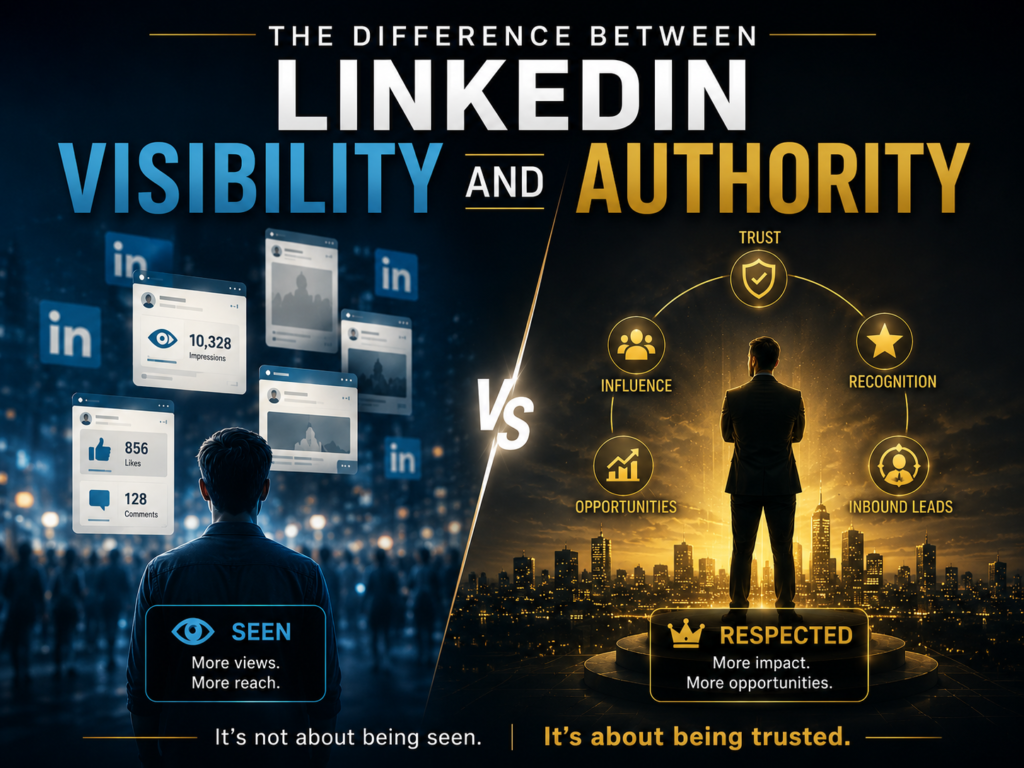
If you have spent any time trying to grow on LinkedIn, you’ve probably heard people talk about impressions, reach, profile views, and engagement. These metrics often become the primary focus for professionals looking to expand their presence on the platform.
While there is nothing wrong with wanting more visibility, many users make the mistake of believing that visibility alone leads to business growth. In reality, if you notice being seen and being trusted are two completely different things. This is where the conversation shifts from LinkedIn visibility to authority.
A post may reach thousands of people, but if those people don’t view you as a credible source of information, that visibility rarely turns into meaningful opportunities.
On the other hand, professionals who establish authority often attract clients, partnerships, referrals, and career opportunities even if their content isn’t constantly going viral. In this guide, you will get to know about the difference between Linkedin visibility and authority as one of the most important lessons for growing your profession.
What Is LinkedIn Visibility?
The way people see your content, profile, or activity on the platform refers to the Linkedin Visibility. It is usually measured through metrics such as:
- Post impressions
- Profile views
- Search appearances
- Content reach
- Engagement rates
- Follower growth
When your content appears in more feeds, your visibility increases. When more people discover your profile through search results or mutual connections, your visibility increases again.
Many users focus heavily on LinkedIn post visibility because it provides immediate feedback. A post with thousands of impressions feels like progress. Seeing profile views rise can be exciting.
However, visibility is only the first step in the relationship-building process. People can see your content without trusting your expertise and read your posts without remembering your name.They just simply engage with your content without ever becoming clients, customers, or advocates.
That’s the reason, visibility alone doesn’t tell the entire story.
What Factors Influence LinkedIn Visibility?
LinkedIn’s algorithm considers several factors when determining who sees your content.
Understanding these factors can help explain how LinkedIn can increase your visibility over time.
Content Relevance
LinkedIn prioritizes content that generates meaningful interactions. Posts that spark conversations, comments, and engagement tend to receive broader distribution than posts that receive little interaction.
Consistency
Professionals who publish content regularly often maintain stronger LinkedIn visibility than those who post occasionally. Consistency signals activity and helps keep your audience engaged.
Engagement Quality
LinkedIn values meaningful interactions more than passive engagement. A thoughtful discussion in the comments often creates more visibility than a large number of simple reactions.
Network Strength
The quality of your professional network also influences content distribution. When your connections engage with your content, LinkedIn is more likely to show it to additional audiences.
LinkedIn Account Visibility Settings
Many users overlook their LinkedIn account visibility settings. Profile discoverability, public profile settings, follower options, and search visibility all affect how easily people can find you.
Optimizing these settings ensures you’re giving yourself the best opportunity to be discovered. These factors help increase exposure, but exposure alone doesn’t automatically create credibility.
Why Visibility Alone Doesn’t Build Trust
One of the biggest misconceptions on LinkedIn is the belief that more visibility automatically leads to more authority. The truth is that visibility can attract attention, but authority earns trust.
We’ve all seen posts that generate thousands of reactions but offer little real value. These posts may achieve strong LinkedIn post visibility, but they don’t necessarily position the author as an expert.
Similarly, a professional can have a large following and still struggle to generate leads or meaningful opportunities. Why?
Because people don’t make decisions based solely on visibility. They make decisions based on trust.
When potential clients, employers, or business partners visit your profile, they’re asking questions such as:
- Does this person know what they’re talking about?
- Can they solve my problem?
- Do they have relevant experience?
- Can I trust their expertise?
Visibility may get you noticed. Authority is what convinces people to take action.
What Is LinkedIn Authority?
Authority is the perception that you are knowledgeable and trustworthy within a specific area of expertise. Unlike visibility, authority isn’t measured by impressions or likes. It’s measured by how people perceive you.
Someone with authority becomes known for sharing valuable insights, solving problems, and providing expertise that others respect. A strong LinkedIn profile often plays a significant role in establishing authority because it serves as your professional foundation.
When someone visits your profile, they should immediately understand:
- What you do
- Who you help
- What expertise you bring
- Why they should trust you
Authority is built gradually through consistent actions rather than short-term spikes in attention. This is why building authority on LinkedIn requires a long-term mindset.
How Authority Creates Better Business Results
While visibility can help people discover you, authority is what turns attention into opportunities. Professionals who focus on building authority on LinkedIn often experience several advantages.
Higher Trust
Trust is one of the most valuable assets in business. People are more likely to engage with professionals who consistently demonstrate expertise and reliability.
Better Lead Quality
Authority attracts people who already view you as a credible solution. Instead of convincing prospects why they should trust you, authority often shortens the decision-making process.
Stronger Personal Branding
Authority strengthens your reputation within your industry. Over time, people begin associating your name with specific expertise, making it easier to stand out in a competitive market.
Increased Referrals
People naturally refer to experts they trust. As authority grows, referrals often become a byproduct of your reputation.
Long-Term Growth
Unlike visibility, which can fluctuate depending on algorithms and trends, authority compounds over time. A reputation built on expertise continues creating opportunities long after a specific post loses momentum.
How to Build Authority on LinkedIn
Many professionals ask how to build authority on LinkedIn. The answer is simple, not complicated, but it does require consistency.
Optimize Your LinkedIn Profile
Your LinkedIn profile should clearly communicate your expertise and value. A strong headline, compelling About section, and relevant experience all contribute to credibility.
Share Expertise, Not Just Opinions
Opinions can attract engagement. Expertise builds trust. Focus on educating your audience, sharing lessons learned, and offering practical insights that solve real problems.
Create Valuable Content Consistently
Consistent content creation remains one of the most effective ways of building authority on LinkedIn. Share case studies, industry trends, personal experiences, and actionable advice that helps your audience.
Showcase Results
People trust evidence. Whenever possible, demonstrate outcomes, successes, and lessons from real-world experiences.
Engage With Industry Conversations
Authority isn’t built through posting alone. Participating in discussions, commenting thoughtfully, and contributing valuable perspectives can strengthen your reputation over time.
Visibility vs Authority: Which Should You Focus On?
The reality is that this isn’t an either-or decision. You need both. LinkedIn visibility helps people discover you. Authority helps them trust you.
Think of visibility as the top of the funnel and authority as the force that moves people through it. Without visibility, your expertise may remain hidden. Without authority, visibility rarely translates into meaningful results.
The most successful LinkedIn professionals understand this balance. They use visibility to attract attention and authority to build relationships.
How LinkedIn Can Increase Your Visibility While Building Authority
The best LinkedIn strategies don’t separate visibility from authority. Instead, they combine both. One of the most effective ways how LinkedIn can increase your visibility is through consistent, high-value content.
When you regularly share expertise:
- More people discover your content.
- More people visit your profile.
- More people engage with your insights.
- More people begin viewing you as a trusted resource.
Over time, visibility and authority start working together. Your content reaches more people because your audience trusts your expertise. In addition to this, your authority grows because more people continue discovering your content.
This creates a cycle that supports long-term professional growth.
Conclusion
Understanding the difference between LinkedIn visibility and authority can transform the way you approach the platform. Visibility is important because it helps people find you. It increases awareness, expands your reach, and creates opportunities for discovery. But visibility alone isn’t enough.
Real business results come from trust, credibility, and expertise. That’s why building authority on LinkedIn should be the ultimate goal. The professionals who generate the most opportunities aren’t necessarily the ones with the highest impressions. They’re the ones who consistently provide value, demonstrate expertise, and earn the trust of their audience.
When you combine both, LinkedIn becomes far more than a social platform it becomes a powerful tool for long-term professional growth.