
Why Your LinkedIn Profile Is More Important Than Your Website
Imagine this someone hears your name during a meeting, sees your comment on a post, or receives a referral about your business. What is the first thing they do?
Most people assume prospects visit their website.
In reality, many people search for them on LinkedIn first.
Whether you are a business owner, consultant, executive, freelancer, or job seeker, your LinkedIn profile has become your digital first impression. Before booking a call, sending a message, or considering a partnership, people want to know who you are. They are looking for the person behind the company.
This shift has changed the way trust is built online. While websites still play an important role, your LinkedIn profile often has a greater influence on whether someone chooses to engage with you. In this article, you’ll learn why your LinkedIn profile matters more than your website, how it impacts credibility, and what you can do to maximize its value.
People Trust People More Than Brands
The internet has created an abundance of information, but it has also created a trust problem.
Consumers and business buyers are becoming increasingly skeptical of polished marketing messages. Instead, they want to know the people behind the brand.
Research from LinkedIn shows that professional networks remain one of the most trusted sources of information for business decisions, even ahead of search engines and AI-generated content. More than half of professionals report trusting insights from their professional network when evaluating opportunities and vendors.
A company website is naturally biased. It presents the best version of a business because it is designed to market products and services. A LinkedIn profile, however, provides something different: context.
People can see your experience, career journey, recommendations, mutual connections, published content, and professional activity. These elements help establish authenticity in ways that traditional websites often cannot.
When buyers trust people more than brands, your personal profile becomes one of your most valuable business assets.
Your LinkedIn Profile Is Often Your First Impression
First impressions happen faster than most people realize.
Research consistently shows that people form opinions within seconds of encountering someone online. Recruiters and decision-makers spend only a brief amount of time evaluating profiles before deciding whether to continue reading.
Think about your own behavior. If you receive a connection request or are introduced to someone professionally, chances are you check their LinkedIn profile before anything else.
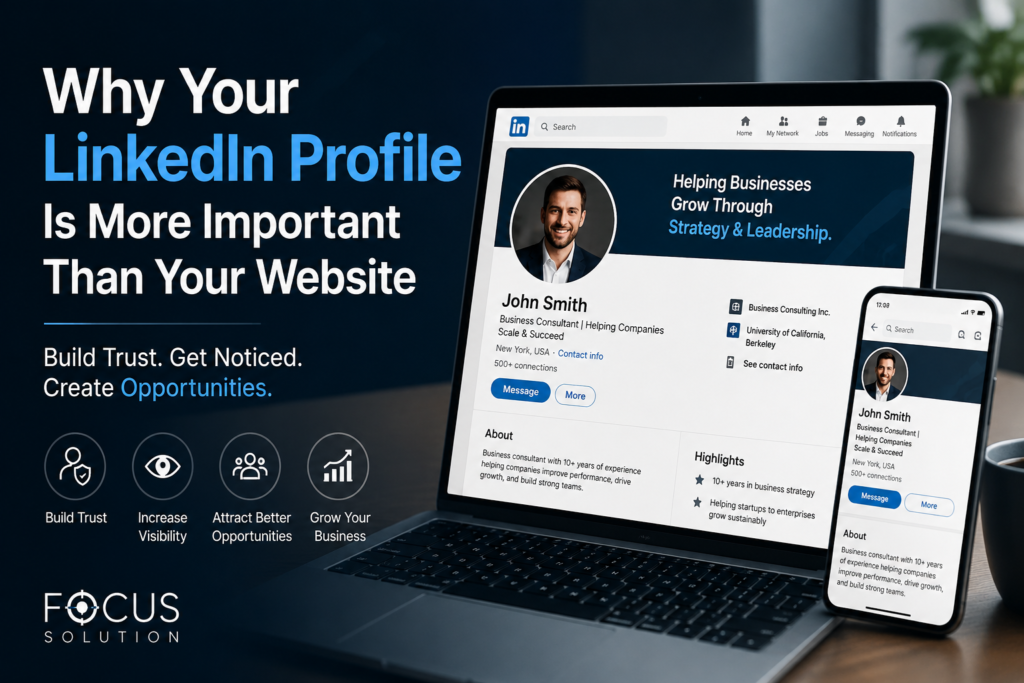
Your profile photo, headline, banner image, and About section immediately communicate who you are and whether you appear credible. In fact, LinkedIn reports that profiles with professional photos receive significantly more views and engagement than profiles without them.
Unlike a website, which often requires visitors to navigate multiple pages, your LinkedIn profile presents your professional story in one place. This convenience makes it easier for people to evaluate and trust you quickly.
Visibility Matters More Than Ownership
One common argument is that a website is more important because you own it.
While ownership is valuable, visibility matters more.
A beautifully designed website has little impact if nobody visits it.
LinkedIn, on the other hand, is a discovery platform. Every comment, post, share, and interaction creates opportunities for new people to find your profile.
With more than one billion members worldwide and millions of professionals actively using the platform, LinkedIn has become one of the largest professional search engines in the world.
When someone discovers your content, clicks on your name, or receives a recommendation from a mutual connection, your profile becomes the destination.
In many cases, prospects encounter your LinkedIn profile long before they ever reach your website.
This means your profile is not just an online resume. It is a visibility engine that works continuously to attract opportunities.
Buyers Research You Before Contacting You
The modern buying process has changed dramatically.
Potential clients no longer contact businesses to gather information. Instead, they conduct extensive research before initiating conversations.
Studies show that buyers increasingly form preferences before speaking with sales representatives, often researching vendors, leaders, and industry experts online first.
When prospects investigate you, they are not just evaluating your company. They are evaluating whether they trust you.
They want answers to questions such as:
- Who is this person?
- Do they have relevant expertise?
- What do they talk about online?
- Are other professionals engaging with them?
- Do they seem credible?
Your LinkedIn profile provides answers to all of these questions.
A website can explain what you do. A LinkedIn profile demonstrates why people should trust you to do it.
LinkedIn Content Builds Authority Faster
One of the biggest advantages of LinkedIn is that it allows you to demonstrate expertise publicly.
Every post becomes evidence of your knowledge.
Every comment showcases your perspective.
Every article helps position you as a thought leader.
Research indicates that a significant percentage of B2B buyers actively consume creator content on LinkedIn and that thought leadership content directly influences purchasing decisions.
Your website is often static. People visit, consume information, and leave.
Your LinkedIn profile is dynamic.
It evolves with every insight you share, every conversation you join, and every professional relationship you build.
Over time, this activity creates a powerful perception of authority that no static website page can replicate.
The Smartest Strategy Is Using Both
This does not mean your website is unimportant.
A website gives you control, supports SEO efforts, showcases services, and serves as a central hub for your business.
However, the reality is that your LinkedIn profile often determines whether someone visits your website in the first place.
Think of your LinkedIn profile as the front door and your website as the office inside.
If the front door creates a poor impression, many people will never enter.
The most effective professionals understand that these platforms work together. They use LinkedIn to build visibility, trust, and authority while using their website to convert interest into inquiries, leads, and customers.
Conclusion
Your LinkedIn profile is no longer just a professional networking tool. It is one of the most powerful trust-building assets you own.
People want to know who they are doing business with before they engage. They research, compare, and evaluate professionals long before scheduling a call or making a purchase decision.
While a website explains your business, a LinkedIn profile showcases the person behind it. It creates first impressions, builds credibility, increases visibility, and helps establish trust at scale.
If you have spent years improving your website but have neglected your LinkedIn profile, it may be time to reconsider where your audience is actually looking first.
The question is no longer whether you need a LinkedIn presence.
The question is whether your LinkedIn profile is working as hard as your website.