
LinkedIn Management Services: Beyond Posting and Scheduling
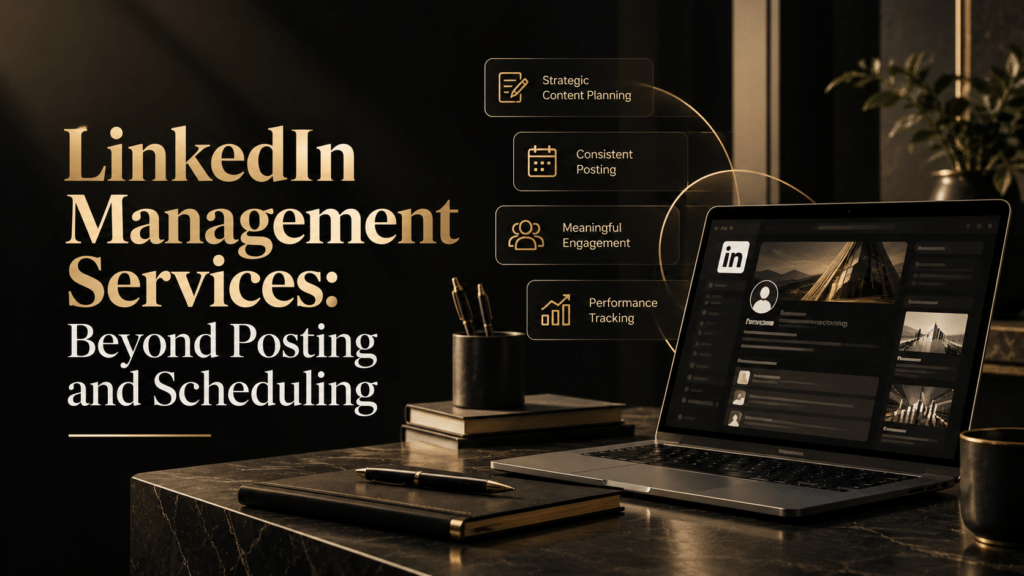
Only 15% of B2B decision-makers rate the thought leadership they read as very good or excellent (Edelman & LinkedIn, 2024). That gap explains why so many professionals post on LinkedIn every week and still never attract a serious inquiry.
LinkedIn management services are the strategic and operational support that runs a professional’s LinkedIn presence from positioning to measurable results. A strong provider handles profile messaging, content planning, publishing, engagement, and reporting. A weak one simply schedules posts you wrote yourself.
This guide shows where that line sits. You’ll see what a complete service includes, how it differs from a scheduling tool, and how to judge any provider before you sign a contract.
What LinkedIn Management Services Actually Include
LinkedIn has more than 1.2 billion members and roughly 310 million monthly active users. It also accounts for 80% of B2B social media leads (Brenton Way, 2026). Those numbers explain why founders and executives treat the platform as a sales channel. Attention alone doesn’t create opportunity though. Someone has to turn that attention into conversations.
A Clear Definition
LinkedIn management services cover the ongoing work of running a LinkedIn presence for a person or a brand. The scope usually spans five areas: positioning, content planning, publishing, engagement, and reporting. Providers range from freelancers to boutique agencies and consulting firms. Some manage only personal profiles while others also handle company pages.
Who Benefits Most
• Founders who win deals through reputation and trust.
• Consultants whose pipeline depends on referrals and visibility.
• Executives building a public voice without the time to maintain it.
• B2B service providers competing on expertise rather than price.
Why Posting and Scheduling Fall Short
Scheduling tools solve a logistics problem. They don’t solve a relevance problem. A post can go live at the perfect hour and still say nothing a buyer needs to hear.
Buyers notice the difference. In the 2025 Edelman-LinkedIn study, 85% of decision-makers said a demonstrated understanding of their business challenges influenced their final choice. A calendar full of generic tips can’t send either signal.
The Cost of Generic Content
Trust is the real asset here. Some 73% of B2B decision-makers say an organization’s thought leadership is more trustworthy than its other marketing materials (Edelman & LinkedIn, 2024). Specific, experience-backed posts earn that trust. Recycled advice wastes it.
The audience is also paying attention. Around 52% of decision-makers spend an hour or more each week reading thought leadership (Edelman & LinkedIn, 2024). Attention exists. Quality is the bottleneck.
Where Opportunity Really Happens
Opportunities rarely come from the post itself. They arrive in comments, replies, and direct messages. Publishing without engagement leaves half the work undone.
A buyer sees your post on Tuesday and checks your profile on Thursday. By the following week they may mention your name to a colleague. Every one of those touchpoints needs a clear message behind it. A scheduler can’t build that message, and it can’t notice when a prospect reacts.
The Five Parts of Fully Managed LinkedIn
Fully managed LinkedIn works as a loop rather than a checklist. Each part feeds the next. Weak links drag down the rest.
Strategic Positioning
Positioning decides who you serve, what problem you solve, and what you want to be known for. Your headline, About section, and Featured section should all say the same thing. Without this foundation, content drifts.
Consider a fractional CFO. Posting general finance tips puts that person in a crowded room. Writing about cash-flow forecasting for SaaS companies under $5 million in revenue makes the same person memorable.
LinkedIn Content Strategy and Planning
A solid LinkedIn content strategy starts with three or four content pillars tied to business goals. Each pillar gets a mix of formats: opinion posts, lessons from client work, frameworks, and short stories. An editorial calendar keeps the mix balanced.
Depth is what buyers reward. In the 2025 research, 91% of hidden buyers said they want insights that reveal unseen risks or opportunities for their business (Edelman & LinkedIn, 2025). Planning should hunt for those insights.
Consistent Publishing
LinkedIn content management covers drafting, editing, approvals, formatting, and scheduling. This is the visible part of the service and the easiest to copy. A cadence you can hold for months beats a burst of daily posts that fades by spring.
Approval workflows matter as much as speed. The best setups let you review drafts quickly while protecting your voice and any client confidentiality.
Meaningful Engagement
A real LinkedIn engagement service is human. It includes thoughtful comments on posts from target accounts, prompt replies to people who respond to you, and warm follow-up with context.
Think of it as networking at a conference. Handing out business cards is easy. Having a useful conversation is what gets you remembered.
Performance Tracking
Impressions look impressive and prove little. Better signals include profile views from target job titles, inbound connection requests, direct messages, booked calls, and pipeline influenced. A monthly review should show what worked and what to change.
Scheduling Tool vs. Fully Managed LinkedIn Service
| Area | Scheduling Tool | Fully Managed Service |
| Positioning | Not included | Profile and message strategy |
| Content planning | You decide topics | Pillars and editorial calendar |
| Writing | You write every post | Drafted and edited with your input |
| Publishing | Automated posting | Posting with approval workflow |
| Engagement | Not included | Comments, replies, and warm follow-up |
| Reporting | Basic analytics | Business-focused monthly review |
| Main output | Posts on time | Authority and inbound opportunities |
What a Typical Managed Engagement Looks Like
Every provider runs things a little differently. Still, most well-run programs follow a similar arc. Knowing it helps you spot gaps in a proposal.
The First 30 Days: Discovery and Setup
The early weeks focus on listening. Expect an interview about your clients, your offers, and the opinions you’d defend in a meeting. The provider audits your profile, defines your pillars, and drafts a first batch of posts for approval. You should also see a target list of accounts and people worth engaging.
Days 31 to 90: Publishing and Learning
Content goes live on a steady rhythm while engagement ramps up. Early reviews compare formats, topics, and response patterns. A short monthly call keeps the voice sharp and surfaces fresh stories from your client work.
After 90 Days: Refinement and Conversion
By this stage the data shows which themes attract the right people. The team doubles down on those themes and builds simple paths from conversation to meeting. That might mean a pinned post, a Featured link, or a short follow-up message.
A Hypothetical Example
Picture a founder who runs a 12-person cybersecurity consultancy. Before management, the founder posted twice a month and rarely replied to comments. After a managed program, every post ties to one of three pillars. Daily engagement targets forty named prospects. This is an illustration of the process rather than a reported result, but it shows how focus and follow-through change the work.
How to Choose a LinkedIn Growth Strategy Service
A LinkedIn growth strategy service should show you a process before it asks for a retainer. The first conversation tells you a lot. Providers who ask detailed questions about your clients, offers, and point of view usually produce better work.
Questions to Ask Before You Hire
• How do you learn my voice and capture my expertise?
• Who writes the drafts and who approves them?
• What does engagement include and is any of it automated?
• Which metrics will you report each month?
• How do you handle confidential client details?
• What are the contract terms and how do I exit?
Red Flags to Avoid
• Guaranteed results such as promised follower counts or leads.
• Automation bots for comments and connection requests, which can also put your account at risk.
• No discovery process and a template calendar sent on day one.
• Vanity reporting that shows impressions and nothing tied to revenue.
Common Mistakes That Stall LinkedIn Growth
• Removing yourself entirely. Your stories and opinions make content credible. Give your provider regular access to your thinking.
• Chasing impressions. Reach without relevant conversations doesn’t pay the bills.
• Skipping engagement. Posting without replying and commenting wastes the audience you’ve earned.
• Changing topics every month. Authority builds through repetition on a focused set of themes.
• Expecting instant results. Credibility compounds over months. Judge the program on leading indicators first.
Conclusion
LinkedIn management services work best when they treat publishing as one step in a larger system. Positioning, content planning, consistent posting, real engagement, and honest measurement turn a profile into a business asset. Take away any one of them and the results flatten.
The evidence points the same way. Buyers trust specific expertise and reward the vendors who show it. If you’re weighing a provider, check whether the service covers all five parts.