
How to Use LinkedIn for Business Growth
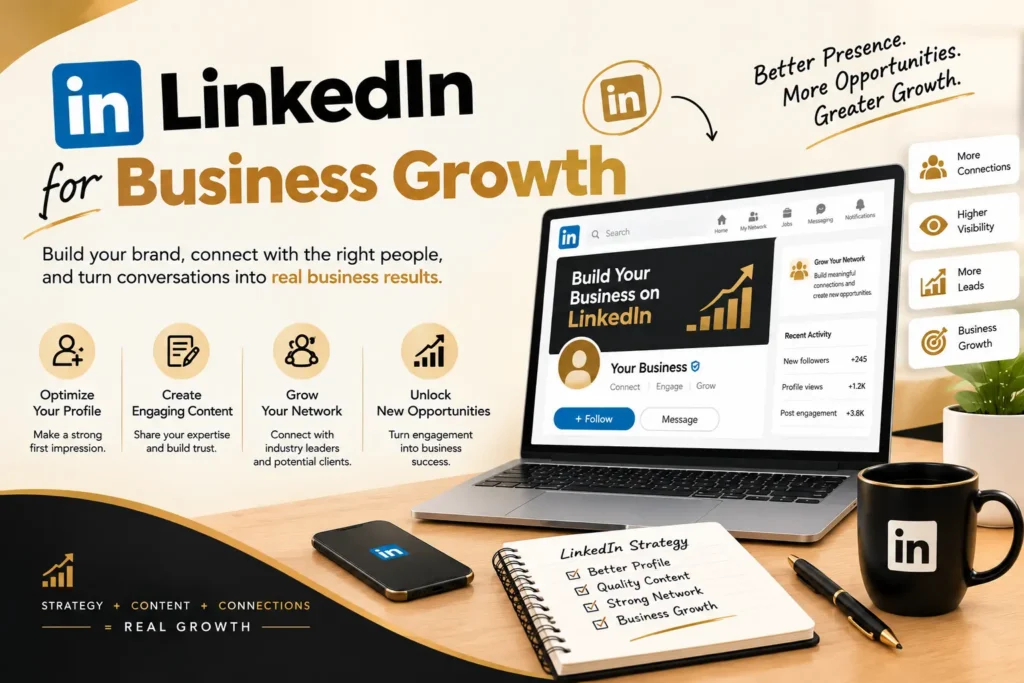
Growing a business requires more than offering a good product or service. People need to understand what you do, recognize the value you provide and trust your expertise before they consider working with you. For businesses trying to reach professional audiences, LinkedIn offers an opportunity to build that trust while creating meaningful connections with potential clients and partners.
However, simply creating a company page or publishing occasional updates is rarely enough. A successful Business Growth Strategy requires a clear approach to positioning, content, visibility and relationship-building. When these elements work together, LinkedIn becomes more than a networking platform. It becomes a system for building credibility, attracting relevant opportunities, and supporting long-term business growth.
Why LinkedIn Matters for Business Growth
LinkedIn provides businesses with access to professionals, decision-makers, founders and industry experts in a professional environment. This makes it particularly useful for companies that sell services, expertise or solutions to other businesses.
The real opportunity is to build relationships before a sales conversation begins. When potential clients regularly encounter useful insights from your business, they can develop an understanding of your expertise before they ever contact you.
Build a Focused LinkedIn Marketing Strategy
A strong LinkedIn Marketing Strategy begins with clarity. Before deciding what to post or whom to contact, determine what you want LinkedIn to accomplish for your business.
Are you trying to attract qualified leads, build industry recognition, establish your founder as an expert or develop strategic partnerships? Each goal requires a slightly different approach. Without a clear objective, businesses can spend considerable time creating content and connecting with people without making meaningful progress toward revenue.
Start by identifying your ideal audience, the challenges they face and the problems your business solves. Then align your profile, company page, content and outreach with those needs. When your activities support the same objective, your marketing becomes more consistent and easier to evaluate.
Strengthen Your Brand Visibility
Brand Visibility is about helping the right people recognize your business and understand what makes it relevant to them. Being visible to everyone is less valuable than becoming recognizable to the people who are most likely to need your expertise.
Your company page should clearly explain what your business does, whom it serves, and what makes its approach valuable. The personal profiles of founders and team members should reinforce the same message. This creates a consistent experience when someone discovers your content and investigates your business.
Consistency also matters in your publishing. Sharing useful industry insights, practical advice, customer challenges and lessons from your experience helps your audience become familiar with your work. Over time, this familiarity can make your business easier to remember when a relevant need arises.
Use Thought Leadership to Build Trust
People rarely choose a business based on visibility alone. They also want confidence that the business understands their challenges and can help them find a solution. This is where Thought Leadership becomes valuable.
Rather than using every post to promote your services, share perspectives that demonstrate how you think. Explain common mistakes in your industry, discuss lessons from your experience, challenge outdated assumptions or break down complicated problems into practical steps.
For example, a consulting firm could explain why a particular growth strategy fails when a business lacks the right operational systems. A financial services firm could clarify a common misunderstanding that affects business owners. These posts offer value before asking the audience to buy anything.
According to LinkedIn’s 2025 research on professional networks and trust, 77% of surveyed B2B marketing leaders said audiences rely on their networks when evaluating brands, not just company channels. This reinforces the importance of building credibility through people and professional relationships alongside company marketing.
Turn LinkedIn Engagement Into Leads
LinkedIn Lead Generation works best when businesses focus on relevance rather than volume. A large network is not necessarily valuable if its members have little connection to your services or ideal customer profile.
Begin by identifying people and organizations that are likely to benefit from what you offer. Pay attention to their roles, business priorities, recent updates and professional interests. This context can help you start conversations that feel relevant instead of sending generic pitches.
Content can also support lead generation. When you publish an insight that addresses a real business challenge, interested readers may visit your profile, engage with your posts or ask questions about your approach. A clear profile and relevant call to action can help turn that interest into a conversation.
The next step is relationship-building. Respond thoughtfully, ask useful questions and understand the person’s needs before introducing your services. Not every conversation will lead to a sale but relevant and respectful interactions can create stronger opportunities over time.
Generate Leads Organically
Organic Lead Generation allows businesses to attract potential customers through content, professional networking, conversations and referrals without relying entirely on paid advertising.
A practical approach combines three activities. First, publish content that answers the questions your target audience is already asking. Second, engage with relevant professionals by contributing useful comments to their discussions. Third, build relationships through personalized connection requests and thoughtful follow-ups.
These activities support one another. Content helps people discover your expertise, engagement makes your perspective visible in relevant conversations and outreach creates opportunities to understand potential clients more directly.
Organic growth does require consistency. Results may take time because trust and buying decisions develop over multiple interactions. Instead of judging the strategy by one post or a short burst of activity, assess whether it is attracting the right audience and creating more meaningful conversations.
Align Your Content With Business Goals
Content should do more than keep your profile active. It should help your audience understand your expertise and move closer to recognizing your business as a relevant solution.
Choose a few content themes connected to your services and audience needs. These might include industry challenges, practical solutions, customer education, professional lessons or common misconceptions. Repeating these themes with fresh examples creates a recognizable message without making every post sound the same.
Balance educational posts with personal insights, industry commentary and evidence of your work. Where appropriate, share case studies or client outcomes with permission and enough context to explain what made the result possible. Avoid making unsupported promises or suggesting that one outcome is guaranteed for everyone.
Every post does not need a sales pitch. Some content builds awareness, some demonstrates expertise and some encourages a direct conversation. Together, these different purposes create a more balanced marketing approach.
Measure What Actually Drives Growth
A successful Business Growth Strategy needs more than activity reports. Impressions, likes, and follower growth can indicate that people are seeing your content but they do not automatically demonstrate business impact.
Track the metrics that relate to your goals. If you want to increase awareness, monitor relevant audience reach and profile visits. If your priority is lead generation, review qualified conversations, inquiries, booked meetings and opportunities created. If revenue is the objective, examine how LinkedIn-influenced leads progress through your sales process.
Review these results regularly to understand which topics attract the right audience, which conversations develop into opportunities, and where potential clients lose interest. Use those findings to refine your positioning, content and outreach.
The objective is not to measure everything. It is to understand which activities are helping your business move forward and invest more deliberately in them.
Make LinkedIn Part of a Repeatable Growth System
Long-term growth becomes easier to support when LinkedIn activities follow a repeatable process rather than depending on occasional bursts of motivation. Start with a clear positioning statement. Plan content around your audience’s challenges. Set aside time to engage with relevant professionals. Follow up on promising conversations and review the results at regular intervals.
This system helps keep your messaging consistent while making your efforts more manageable. It also prevents a common mistake: treating content creation, networking, and lead generation as separate tasks instead of connected parts of the same business development process.
Most importantly, make sure your LinkedIn presence reflects the quality of the business behind it. Your messaging, profile, conversations and client experience should reinforce the same promise.
Conclusion
Learning How to Use LinkedIn for Business Growth is not about posting more frequently or collecting as many connections as possible. It is about building a professional presence that helps the right people discover your expertise, understand your value, and develop confidence in your business.
A focused marketing strategy, consistent brand visibility, useful thought leadership, and relationship-driven lead generation can work together to create sustainable opportunities. When these activities are aligned with clear business goals, LinkedIn becomes a more purposeful part of your growth process.
The key is to stop treating visibility as the final destination. Use it to build recognition, turn recognition into trust and create relationships that can lead to meaningful business opportunities.
Frequently Asked Questions
1. How can LinkedIn help a business grow?
LinkedIn helps businesses reach professional audiences, build brand awareness, demonstrate expertise, develop relationships and attract potential clients.
2. What is a LinkedIn marketing strategy?
A LinkedIn marketing strategy is a plan for using content, networking, engagement and other platform activities to achieve business goals.
3. How does LinkedIn generate B2B leads?
Businesses can attract B2B leads through useful content, targeted networking, relevant conversations, personalized outreach and clear calls to action.
4. Can businesses generate leads organically on LinkedIn?
Yes. Businesses can attract potential clients through consistent content, meaningful engagement, professional relationships and personalized outreach without relying entirely on paid ads.
5. How often should a business post on LinkedIn?
There is no universal posting frequency. Businesses should choose a sustainable schedule that allows them to publish relevant, useful content consistently while maintaining quality.
6. How can a business measure LinkedIn marketing success?
Track metrics that align with business goals, such as relevant profile visits, qualified conversations, inquiries, booked meetings, lead quality and revenue influenced by LinkedIn.