
How Does Ghostwriting Work? The Process, Contracts, and Costs
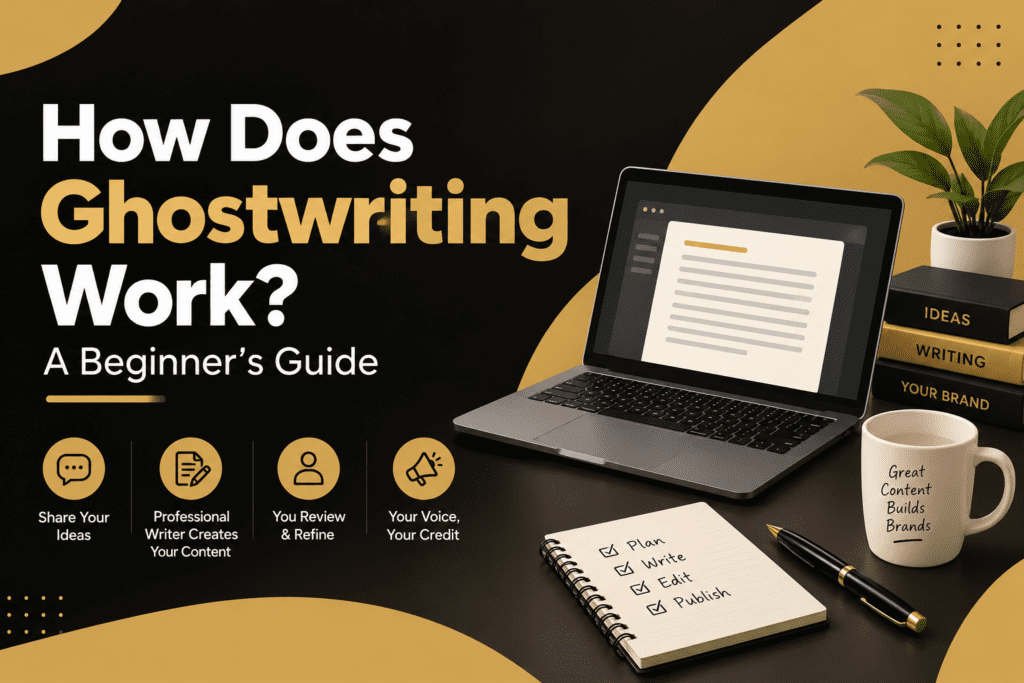
How ghostwriting works: A ghostwriter writes content that another person publishes under their own name. The client supplies the ideas and stories. The writer supplies the craft. A written contract settles content ownership and credit.
This guide covers the full ghostwriting process, the contract terms that matter, realistic costs, and how to hire well.
Key takeaways
- Ghostwriting is a collaboration built on the client’s ideas and voice.
- The contract decides ownership, credit, and confidentiality.
- Most projects follow one arc: discovery, interviews, outline, drafting, revisions, handoff.
- Ghostwriting is legal. Ethics depend on context, especially in academic settings.
What Is Ghostwriting?
What is ghostwriting? It’s professional writing done for someone else, who then publishes it as their own. Politicians, athletes, executives, and founders have used it for generations.
Think of a session musician. The artist owns the song. The musician helps it sound right on the record.
What Does a Ghostwriter Do?
What does a ghostwriter do beyond typing? A good one will:
- Interview the client and gather raw material
- Study the client’s speech patterns and writing samples
- Run content research and check facts
- Handle content drafting in the client’s voice
- Revise Portfolio until the client approves
Ghostwriter vs. Co-Author vs. Editor
| Role | Who generates the ideas? | Who writes the text? | Typical credit |
| Ghostwriter | Client | Writer | None, or an acknowledgment |
| Co-author | Both | Both | Named on the cover |
| “As told to” writer | Client | Writer | Named on the cover |
| Editor | Author | Author | Usually none |
Types of Ghostwriting
- Books: Memoirs, business books, and self-help titles. These run the longest.
- Speeches: Writers shape keynotes and public remarks for the ear.
- Blogs and articles: Content ghostwriting supports thought leadership.
- LinkedIn posts: LinkedIn ghostwriting keeps busy experts visible with steady, personal content.
Who Hires Ghostwriters?
Clients usually lack time or writing skill. They rarely lack industry expertise. Common clients include executives, consultants, athletes, public officials, and doctors.
Real-World Examples
Case study: The Art of the Deal (1987). Tony Schwartz wrote the book with Donald Trump. The cover credits Schwartz with a “with” line. He has since spoken publicly about the experience.
Case study: Open (2009) and Spare (2023). Pulitzer Prize-winning journalist J.R. Moehringer worked on both memoirs, for Andre Agassi and Prince Harry. Each client supplied the life story. Moehringer shaped it into a narrative arc. That’s professional storytelling in action.
The Ghostwriting Process, Step by Step
Details change by format. A LinkedIn post takes days. A memoir takes many months.
Discovery Call and Fit Check
You explain your goal, audience, and timeline. The writer asks about your voice. This call also tests chemistry, since you’ll spend many hours together.
Scope, Contract, and Payment Terms
Your agreement should cover:
- Word count or deliverables
- Number of revision rounds
- Deadlines and milestones
- Fees and payment schedule
- Ownership and credit
- Confidentiality
Vague scope causes most client disputes.
Voice Capture and the Interview Process
The writer needs to sound like you. The interview process usually runs through recorded calls of 60 to 90 minutes. Good writers ask open questions and follow tangents, because tangents often hold the best stories. They also mine old talks, emails, and posts. Strong authentic communication depends on this stage.
Outline and Approval
The writer drafts a structure first. Fixing an outline costs far less than rewriting a draft.
Research and Fact-Checking
The writer verifies statistics, dates, and quotes. You still carry final responsibility, since your name goes on the work.
Drafting and Revisions
Books usually arrive chapter by chapter. This catches voice problems early. Specific feedback helps most. “Make it sound like me” gives the writer little. “I’d never say ‘leverage’; I say ‘use’” gives them plenty. Strong client collaboration makes the final product better.
Final Delivery and Publishing
The writer delivers the final manuscript. The publishing process (layout, design, marketing) usually sits outside a ghostwriter’s scope. Many writers will recommend editors, designers, or agents.
Ownership, Credit, and Confidentiality
Work-for-Hire vs. Copyright Assignment
By default, the person who writes a work holds the copyright. Contracts change that in one of two ways:
- Work made for hire: The client is treated as the legal author.
- Copyright assignment: The writer signs ownership over in writing.
Under U.S. law, an author can often terminate a copyright assignment after 35 years. Work made for hire doesn’t carry that right. An attorney can tell you which structure fits.
Credit Options
| Credit style | How it looks | Best for |
| No credit | Client listed alone | Executives, speeches, blogs |
| Acknowledgment | Thank-you in the book | Memoirs, business books |
| “With” credit | “By Client with Writer” | Celebrity and expert books |
| “As told to” | Writer named on cover | Life stories |
Confidentiality and Royalties
Most contracts include an NDA. Reputable professional ghostwriting services treat it seriously. Most writers take flat fees. Some accept a lower upfront fee plus a royalty share.
How Much Does a Ghostwriter Cost?
I haven’t pulled live market data, so treat these as ballpark figures and request written quotes.
| Content type | Common pricing model | Rough range |
| Blog posts | Per piece | Low hundreds for experienced writers |
| LinkedIn content | Monthly retainer | Several hundred to a few thousand dollars |
| Speeches | Per speech | Hundreds to several thousand dollars |
| Full-length book | Flat project fee | Roughly $20,000 to over $100,000 |
For current benchmarks, check Reedsy and the Authors Guild.
What drives the price: experience, length, research load, rush timelines, and full anonymity.
Red flags: very low quotes for a full book, no contract, guaranteed bestseller promises, and pressure to pay everything upfront.
How to Hire a Ghostwriter
Look for vetted writers through:
- Specialist marketplaces such as Reedsy
- Ghostwriting agencies
- Literary agents
- Referrals from authors in your field
Ask about their experience in your genre, their voice-capture method, included revisions, timeline, and references. Read samples for craft. A ghostwriter should sound different for different clients.
How to Become a Ghostwriter
How to become a ghostwriter is a common question. No degree is required.
- Build writing skill across formats.
- Pick a niche, such as business, health, or memoir.
- Create samples in different voices.
- Learn interviewing.
- Find first clients through agencies, platforms, or your network.
- Learn contracts, NDAs, and fee structures.
Many ghostwriters start in journalism, marketing, or editing.
Is Ghostwriting Worth It?
For the right person, yes. The benefits of ghostwriting include:
- Time saved for your core work
- Stronger brand messaging
- Greater online visibility through steady publishing
- Improved professional reputation and professional authority
- Content consistency on a reliable schedule
| Pros | Cons |
| Frees your time | Costs real money |
| Raises writing quality | Needs your active involvement |
| Speeds up publishing | Voice may need revisions |
It suits busy experts with strong ideas. It works poorly if you can’t commit to interviews. The writer can’t invent your insights.
Is Ghostwriting Ethical and Legal?
It’s legal. Publishing, business, and politics broadly accept it. Academic settings differ. Submitting someone else’s writing for a grade is widely treated as misconduct, so check your institution’s rules. For high-stakes projects, consult an intellectual property attorney.
Common Mistakes Clients Make
- Skipping the written contract
- Changing the scope midway
- Arriving without source material
- Setting unrealistic timelines
Frequently Asked Questions
Do ghostwriters get credit?
Usually not publicly. Some get an acknowledgment or a “with” credit. The contract decides.
Who owns a ghostwritten book?
The client typically does, through a work-made-for-hire clause or a written assignment.
Is ghostwriting plagiarism?
No, when the client commissions and owns the work.
Can I use AI instead of a ghostwriter?
AI can help with outlines and rough drafts. It can’t conduct real interviews or draw on your lived experience. Always fact-check its output.
Conclusion
Ghostwriting pairs your ideas with a writer’s craft. Define your goal, set a budget, collect source material, review samples, and sign a clear contract. Then book a discovery call with one vetted writer this week.